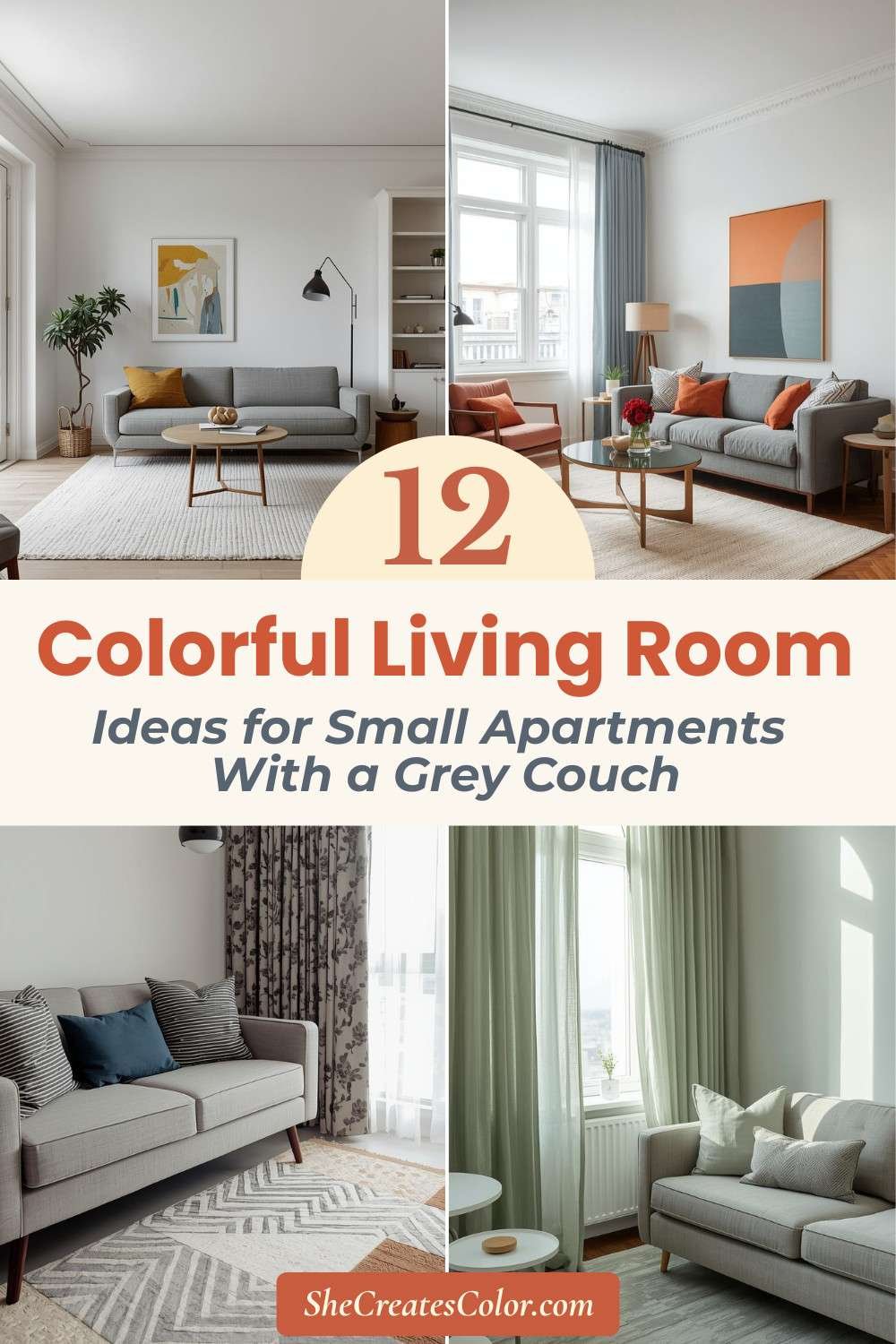
You bought the grey couch because it made sense. It matched everything and felt safe.
It didn’t scream “I’ll regret this in six months.”
You are sitting on it daily now and you are thinking… why is my small apartment living room a little flat?
You are actually lucky in that you live in a small apartment with a grey couch.
Grey works like a blank canvas. You can create a story of almost any color around it. The secret lies in knowing how to add color without saturating a small space.
So let’s fix this properly.
Here are 12 colorful living room ideas for small apartments with a grey couch and we’re going deeper on each one so you can actually use them.
Table of Contents
1. Build a Simple 3-Color Palette Around Your Grey Couch
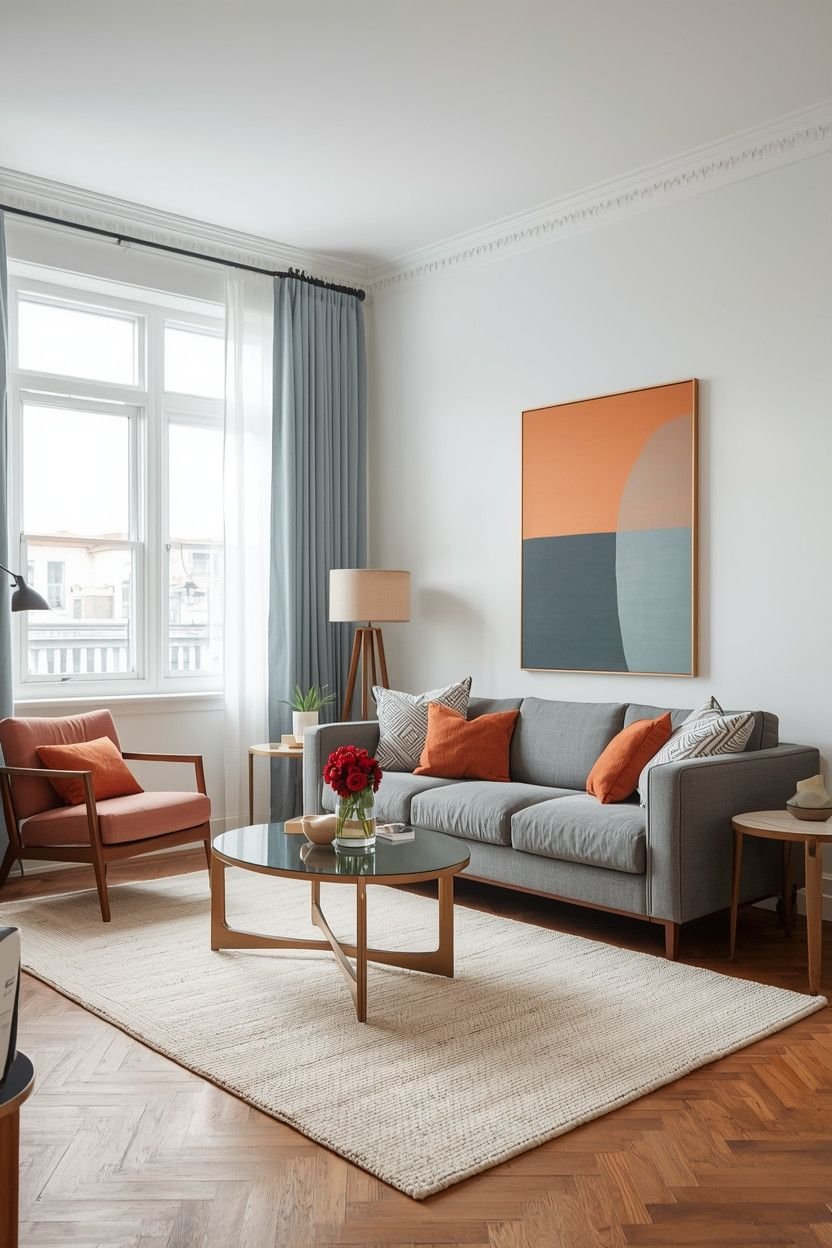
Small spaces easily become overwhelmed. The more colors you keep adding, the harder it is for your eyes to know where to land.
The simple formula is that you don’t need to do anything else, just follow this 3-color rule:
- 1 neutral base
- 1 secondary color
- 1 bold accent
Your grey couch already counts as your neutral base so now you only need two more colors.
Why This Works So Well in Small Apartments
Everything becomes purposeful when you are restricted to three primary colors.
For example:
- Grey couch (base)
- Dusty blue (secondary)
- Rust orange (accent)
That’s it. No neon pink surprise pillow sneaking in at the last minute.
💭 Ever noticed how designer spaces look calm even when they use bold colors? They edit and you should too.
How to Apply the 3-Color Rule Practically
Here is how I usually break it down in a small apartment living room:
Base (60%)
- Grey couch
- Neutral rug
- Cream walls
Secondary (30%)
- Curtains
- Accent chair
- Larger art pieces
Accent (10%)
- Pillows
- Small decor
- Vases
- Books
That 60/30/10 ratio keeps things balanced. You do not actually have to measure it with the calculator, you just have to eyeball it.
If your room starts feeling loud, you probably let the accent color take over.
Color Combos That Always Work with Grey
Try one of these if you feel stuck because each combo adds warmth without shrinking the room:
- Grey + Sage + Gold
- Grey + Navy + Mustard
- Grey + Blush + Walnut Wood
- Grey + Teal + Cream
- Grey + Olive + Terracotta
2. Warm Up the Grey with Earthy and Cozy Tones
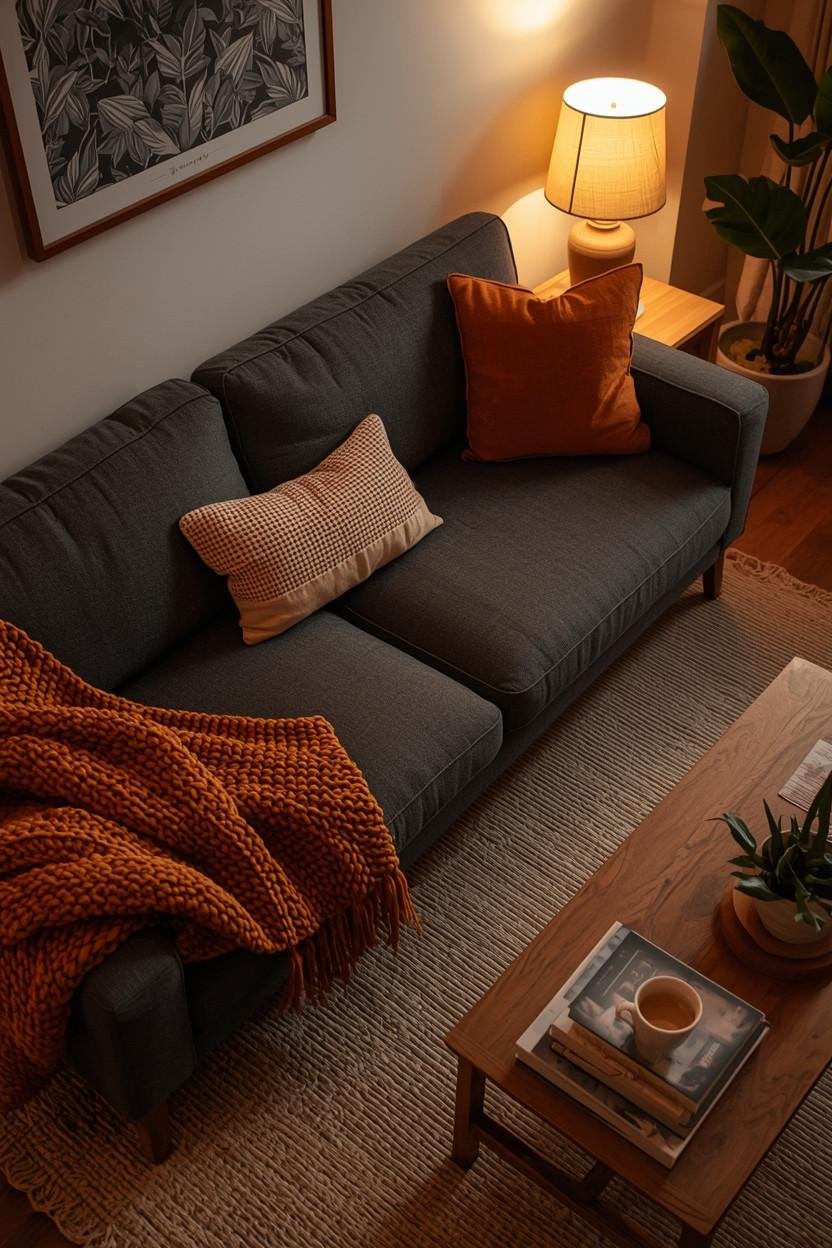
Grey is sensitive to cold particularly in a small apartment having white walls and overhead lights that appear to be in a hospital. Warm the grey couch instead of fighting.
Add Warm Colors Through Textiles
Start with:
- Rust throw blankets
- Beige or cream pillows
- Woven rugs
- Warm wood coffee tables
Grey is softened immediately by warm tones.
🖊 I once decorated a small apartment living room with a charcoal couch and with terracotta pillows and a woven rug. The whole room changed to warm and cushy. Same couch yet absolutely different atmosphere.
Layer Texture, Not Just Color
Texture adds depth without adding visual clutter as well as helps color feel rich instead of loud. In my opinion, texture matters more than adding another bright object.
Use:
- Chunky knit throws
- Linen curtains
- Rattan baskets
- Velvet cushions
Lighting Makes or Breaks Warmth
Harsh white light can really ruin a cozy setup and without you even knowing it.
Choose:
- Warm white bulbs
- Table lamps instead of overhead lights
- Soft light near your grey couch
Lighting affects color perception and warm light makes earthy tones glow.
💡 Ever turned on a lamp at night and suddenly loved your living room more? Exactly.
3. Create One Bold Focal Point (And Let It Shine)
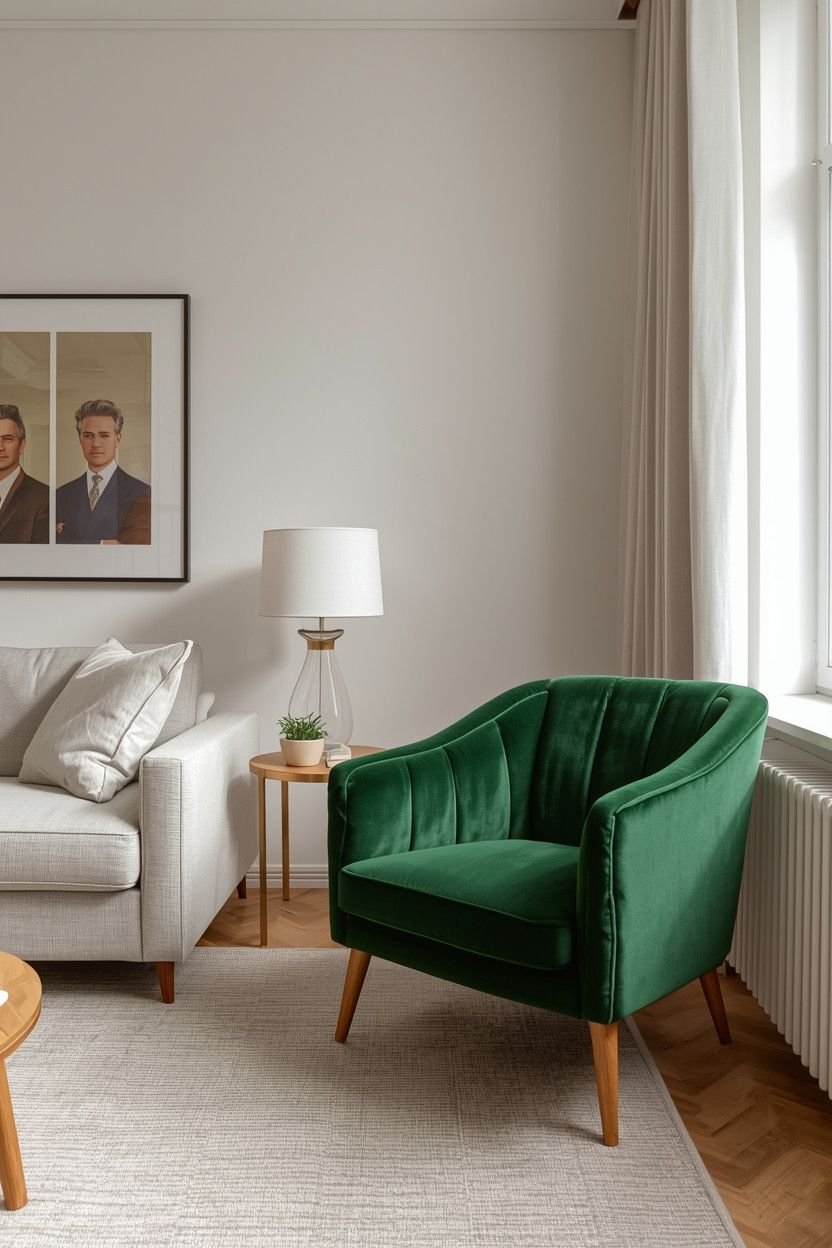
In a small apartment, you don’t need five colorful moments but just a strong one. Your grey couch gives you a calm base so now choose a hero.
Option 1: A Bold Accent Chair
Place a:
- Mustard armchair
- Emerald velvet chair
- Deep blue swivel chair
Next to the grey couch. The rest is to keep simple and leave it to the chair to talk.
Option 2: A Large Statement Art Piece
Rather than little random frames, place a single large-sized colorful artwork above the couch.
Pull colors from that art into:
- Pillows
- Decor
- Rugs
This keeps everything cohesive.
👀 Have you ever seen ten tiny frames fighting for attention above a sofa? Yeah… let’s not do that.
Option 3: A Dramatic Rug
A patterned rug with rich tones can completely transform your grey couch setup. The rug makes the space grounded and visually extended.
Look for rugs that:
- Include grey in the pattern
- Add 2–3 bold colors
- Feel balanced, not chaotic
Why Focal Points Matter in Small Spaces
Everything is competing for attention without a point of focus. And small apartments need clarity, so when you create a clear focal point:
- Your eye knows where to go
- The room feels intentional
- The space feels larger
4. Use Vertical Color to Make the Room Feel Bigger
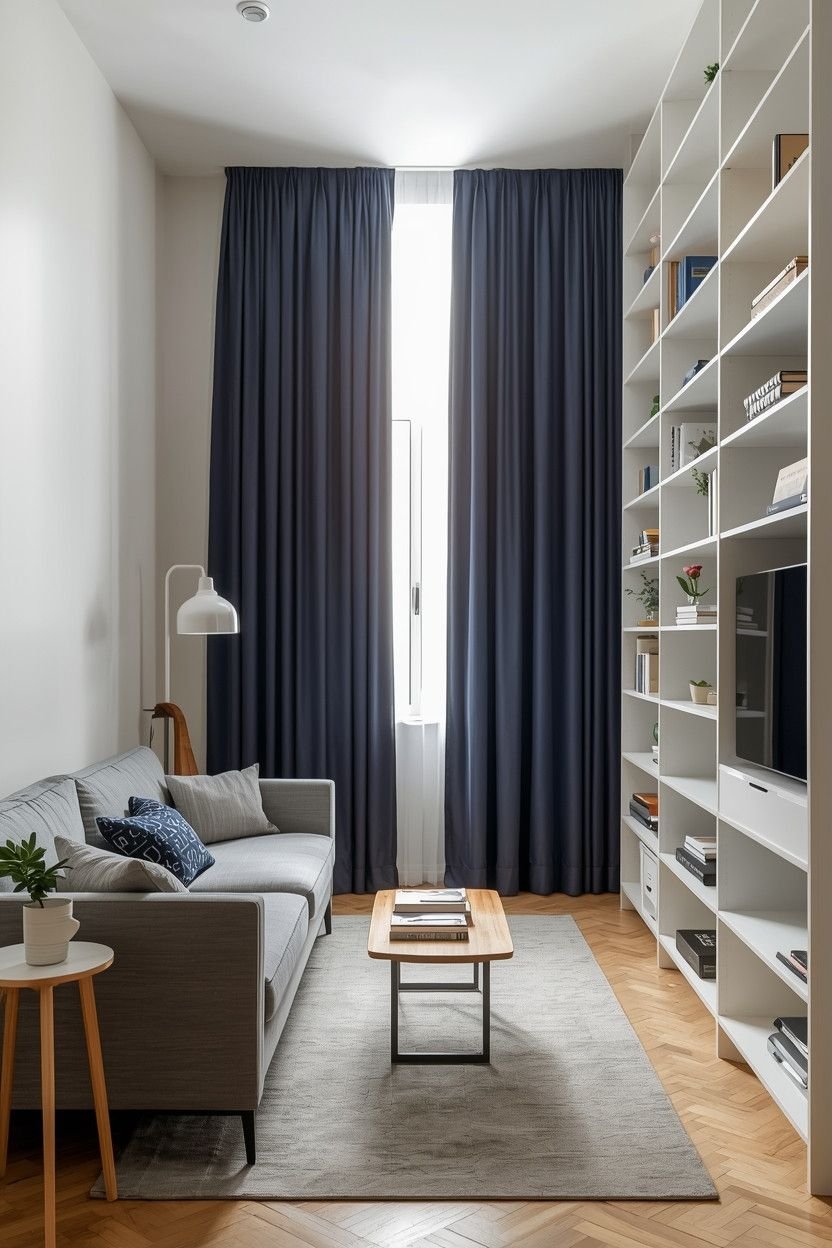
Most people decorate at couch level only. But in small apartment living rooms, you must use vertical space.
Add Color Through Curtains
Hang curtains higher than your window frame.
Floor-length curtains add height and elegance. And yes, even renters can hang curtain rods. You won’t destroy the apartment, that is for sure.
Choose:
- Soft sage
- Deep navy
- Warm beige
Style Shelves with Repeated Color
Repetition keeps things cohesive and one random purple vase that appears nowhere else just confuses the room. So, If you have floating shelves:
- Repeat your accent color in books
- Add ceramic decor in matching tones
- Include plants for softness
Paint or Style a Subtle Accent Wall
If your lease allows paint, choose a soft, warm shade instead of bright white.
Try:
- Warm greige
- Muted olive
- Soft clay
These colors do not shrink the room and go well with a grey couch. When you can not paint, make an “imitation accent wall” with a huge painting or a tapestry.
5. Balance Bold Color with Clean, Open Space
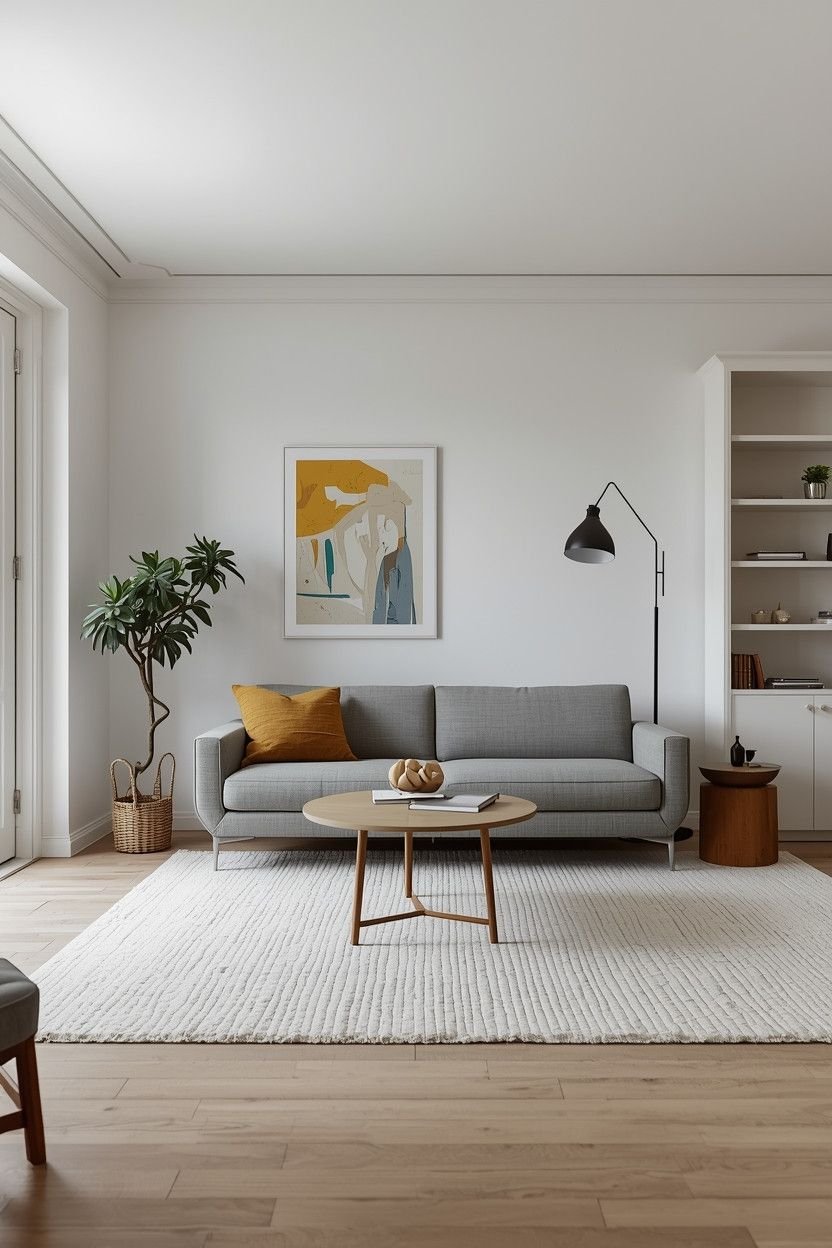
Colorful doesn’t mean crowded. In fact, small apartments need breathing room more than big houses.
Keep Large Furniture Neutral
Stick to:
- Grey sofa
- Neutral coffee table
- Simple media console
Then add color through removable pieces. That way you stay flexible and don’t overwhelm the space.
Edit Before You Add
Before you buy another colorful pillow, remove something.
Declutter:
- Extra side tables
- Unnecessary decor
- Overloaded shelves
Color glows best where there is room around it.
🧠 And also, have you ever seen how one bright pillow can transform a clean couch into a miracle, but it gets lost in a dirty couch? That’s not the pillow’s fault.
Use Plants as Soft Color
Plants add green without feeling loud. So, If you struggle with color choices, start with plants, they rarely clash.
They:
- Soften grey
- Add life
- Work in every style
6. Add Subtle Pattern to Break Up the Grey
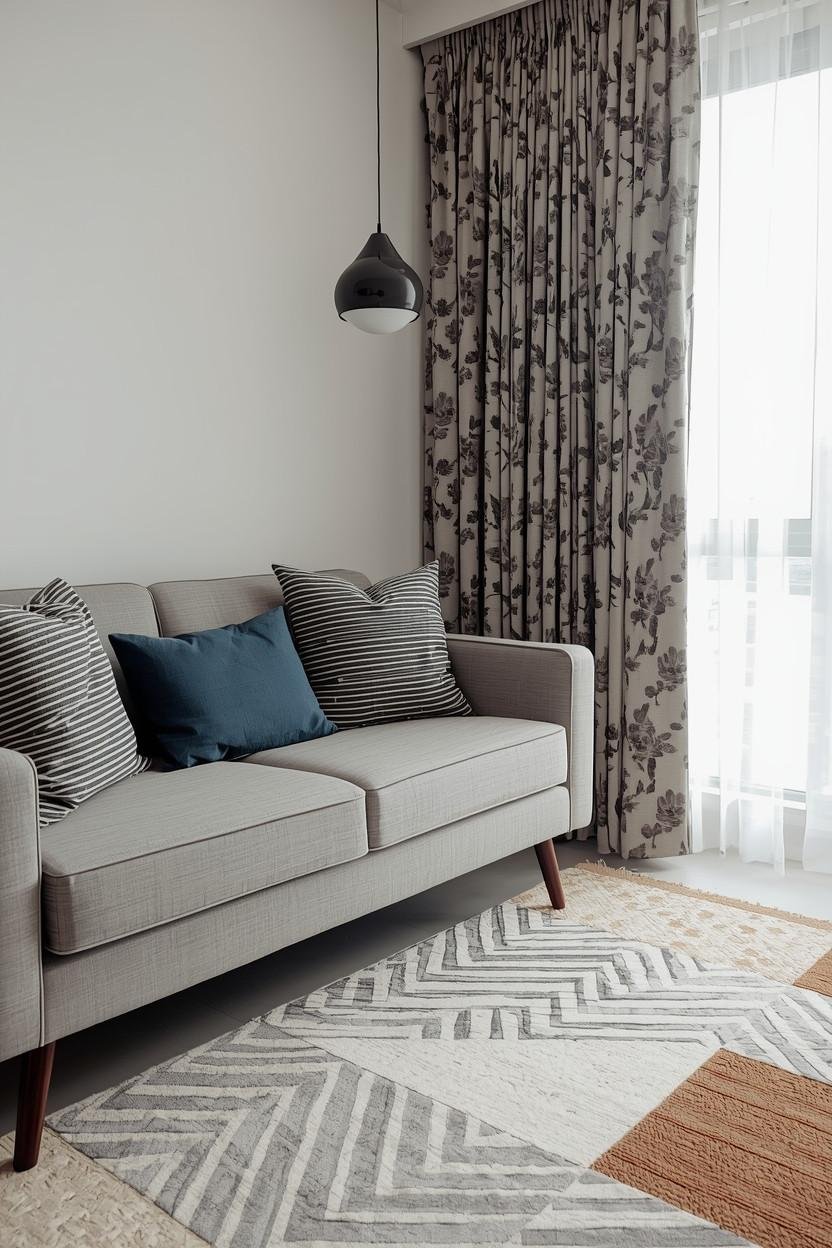
Grey couches can sometimes look flat in small apartments while pattern solves that instantly.
Instead of adding more colors, introduce pattern in your existing palette.
Smart Ways to Use Pattern
- Striped pillows in your accent color
- A geometric rug that includes grey
- Floral curtains in muted tones
- Abstract wall art
Pattern adds movement without shrinking the space.
👀 Ever notice how a patterned pillow suddenly makes a couch feel more styled? That’s because the pattern creates visual interest without adding bulk.
Keep Patterns Controlled
In a small apartment:
- Stick to 2-3 patterns max
- Vary scale (one large pattern, one small)
- Keep colors consistent
If everything has a bold pattern, your living room will feel chaotic. And we’re going for stylish, not circus.
7. Mix Cool and Warm Tones Intentionally
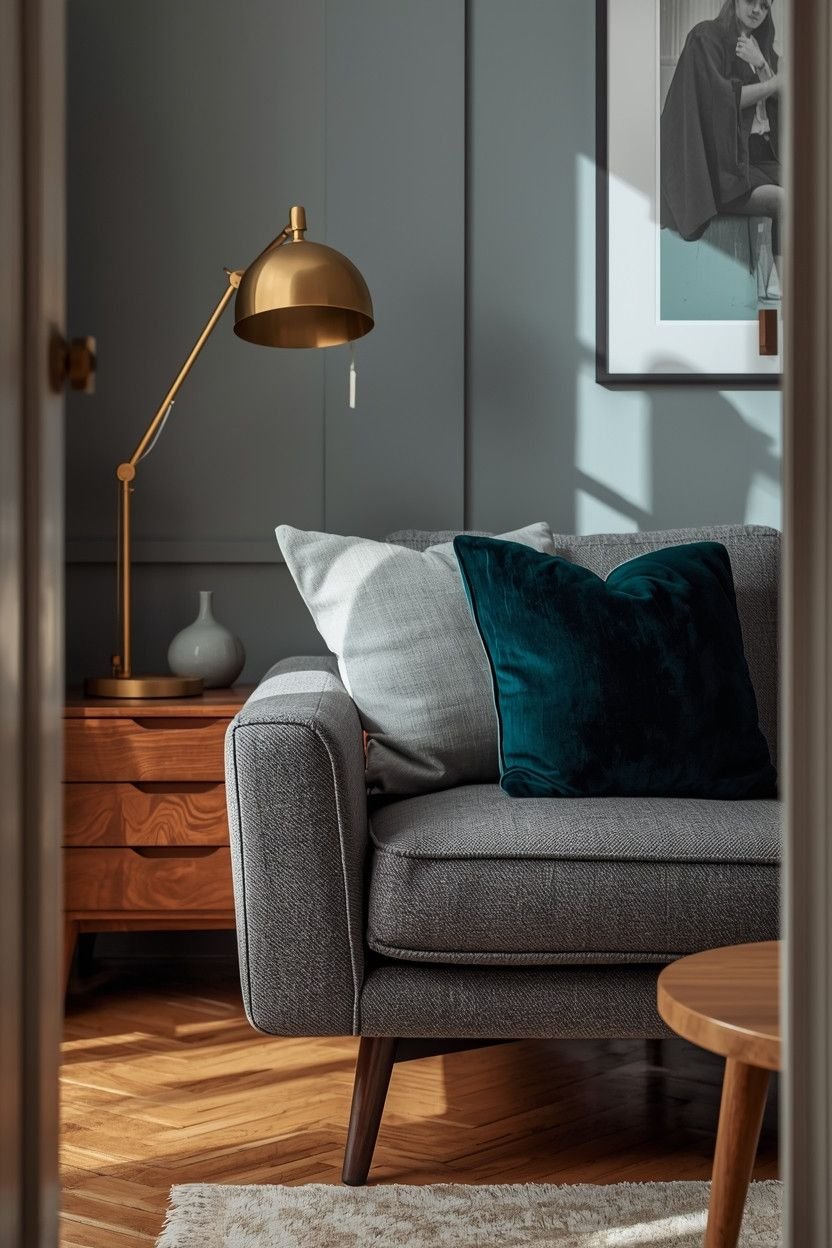
Grey sits on the cool side. If you only add more cool tones, the room may feel stiff.
That is why it is important to balance it with warmth.
Example Combos:
- Grey + Navy + Walnut Wood
- Grey + Teal + Brass
- Grey + Blush + Oak
- Grey + Sage + Rattan
The coolness of grey is softened by warm materials such as wood, leather and woven textures.
Why Temperature Balance Matters
Small spaces increase the color temperature. Too cool feels sterile while too warm feels heavy.
Incorporation of cool and warm brings balance.
🧠 Have you ever entered a room and said to yourself “this room feels good, yet you do not know why?” Balance of temperatures normally comes into play.
8. Use Color Blocking in Small Doses
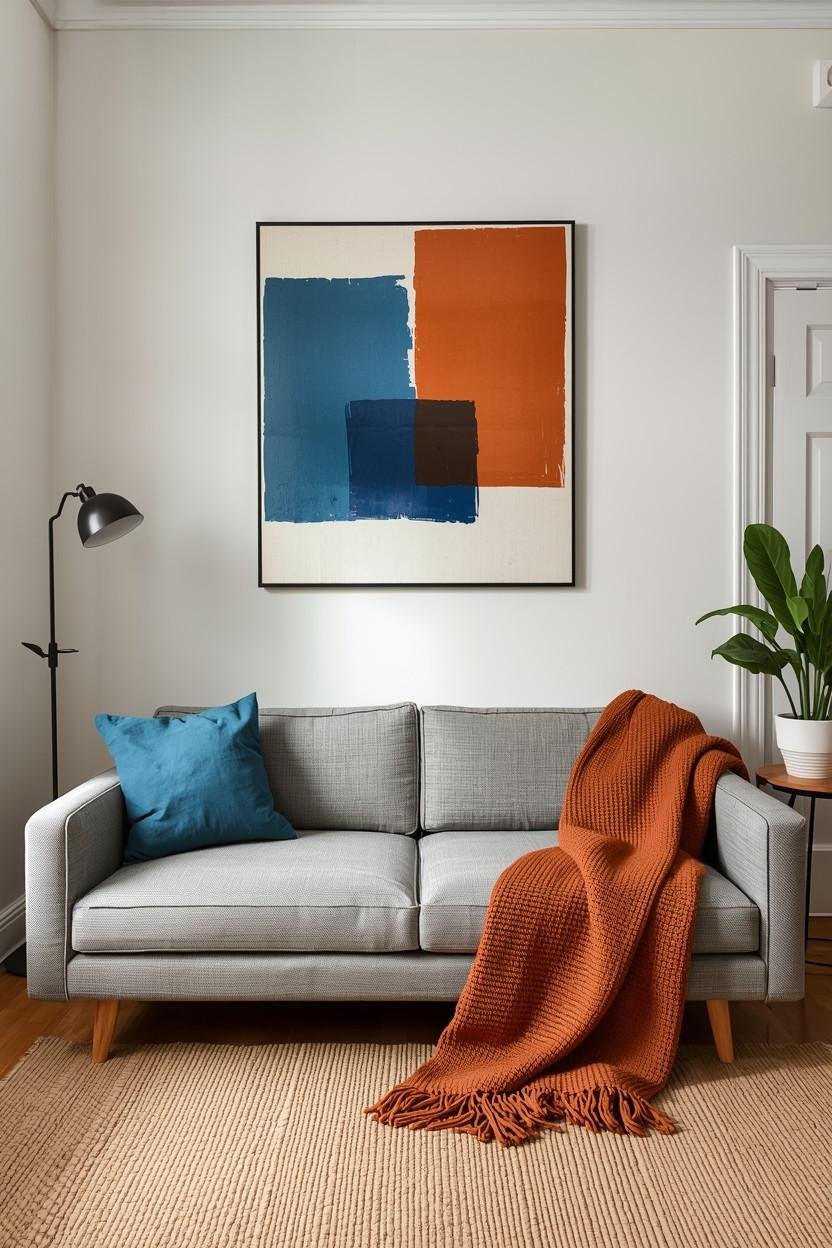
Color blocking can be dramatic but in a small apartment it can be modern and deliberate. You don’t need a giant painted wall.
Try This Instead
- A bold throw draped neatly across one side of the couch
- A large piece of art with strong color blocks
- Two matching colorful chairs opposite the grey couch
Interestingly color blocking creates clarity and makes bold color feel designed, not accidental.
Keep It Simple
Stick to:
- One strong color block
- One secondary tone
- Neutral surroundings
That’s how you keep it stylish.
9. Bring in Natural Elements to Soften Color
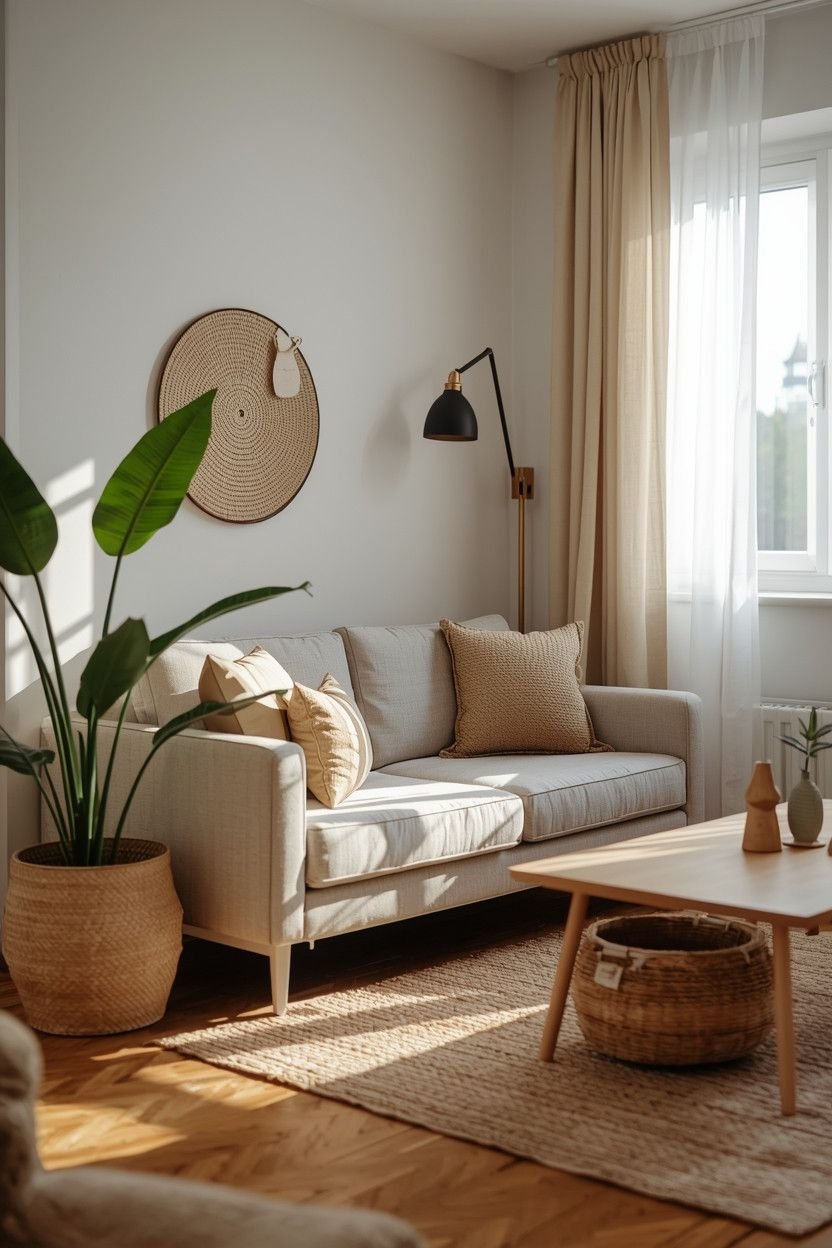
Plants, wood, stone and woven materials keep colorful living rooms grounded. In small apartments, natural materials prevent bold color from feeling artificial.
Add:
- A tall leafy plant
- A woven basket
- A wooden coffee table
- Linen cushions
Green works beautifully with grey. It adds life without overwhelming the space. And honestly, plants fix almost everything.
Why This Works in Small Apartments
Natural materials absorb visual intensity. Without them, colorful decor can feel harsh.
They:
- Soften bold tones
- Add warmth
- Create depth
10. Style the Coffee Table with Purpose
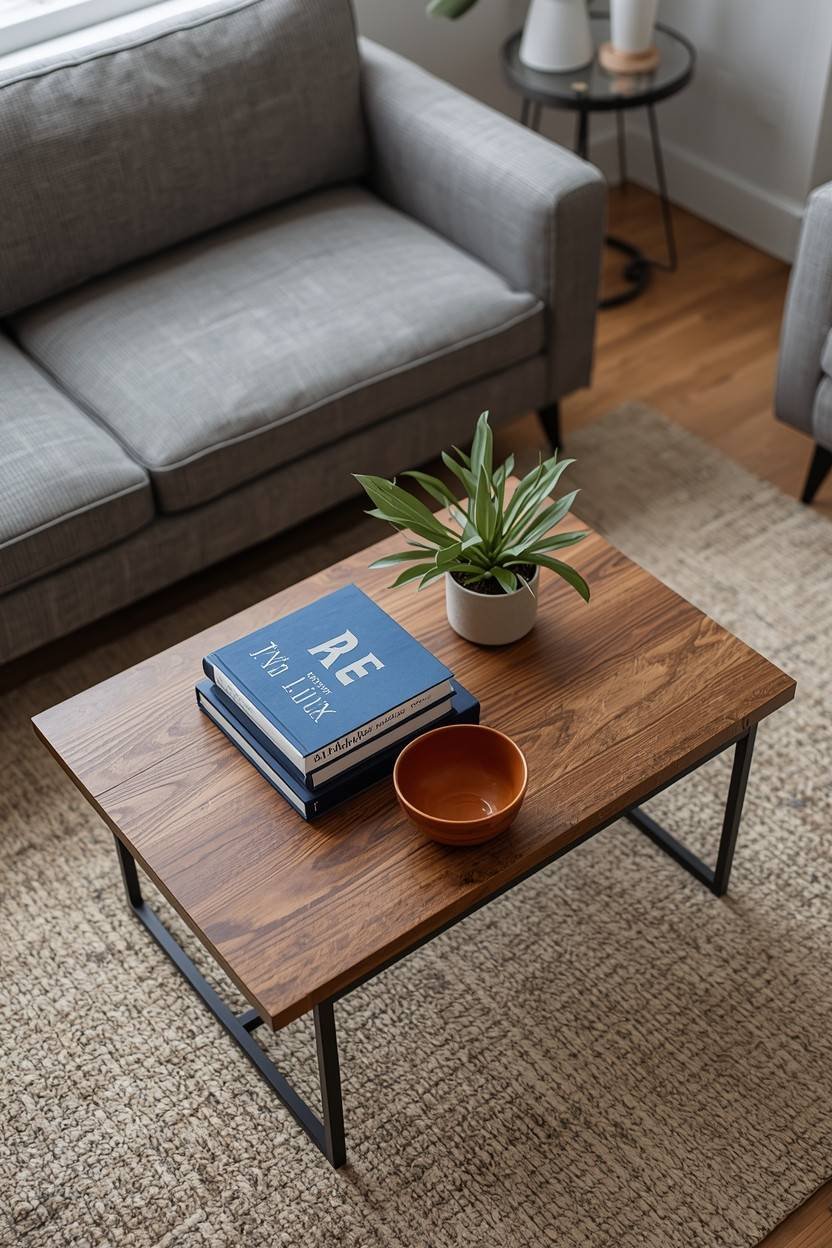
Coffee tables often turn into clutter magnets. Don’t let yours sabotage your colorful setup.
Follow the Rule of Three
Group decor in threes:
- Stack of books in your accent color
- Small plant
- Decorative bowl
Keep it intentional.
A coffee table styled thoughtfully ties your grey couch into the rest of the room.
Leave Negative Space
Never cover the whole surface, always remember that little effort can make a huge impact.
Negative space:
- Makes decor look expensive
- Keeps small apartments feeling airy
- Highlights your accent colors
11. Use Curtains to Add Soft Color Without Bulk
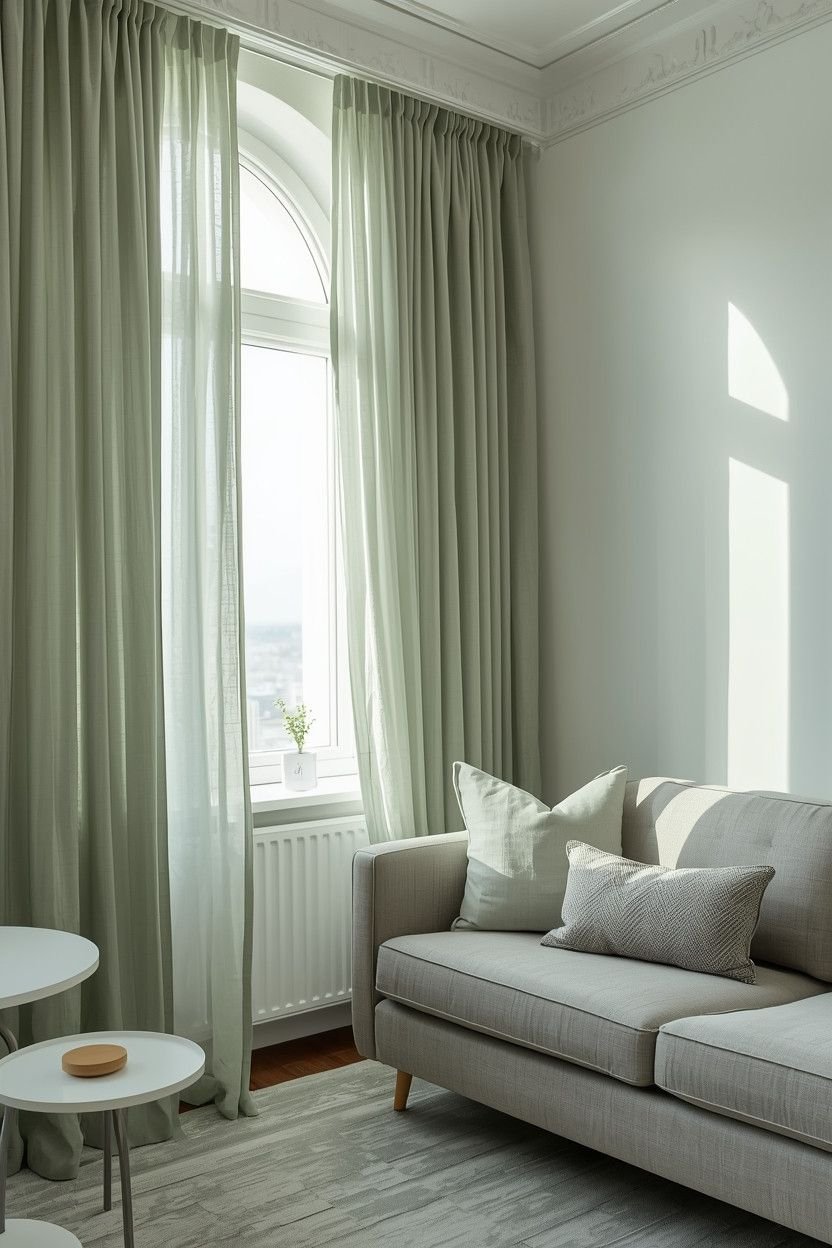
Curtains take up vertical space without taking up floor space so perfect for small apartments.
Choose Curtains That:
- Touch the floor
- Match your secondary color
- Feel light and breathable
Grey couches are matched well with soft sage, light blue, warm cream and dusty blush.
Hang Them Higher
Mount curtain rods closer to the ceiling.
This:
- Makes the room look taller
- Adds elegance
- Draws the eye upward
Small styling trick and huge visual payoff.
12. Create a Coordinated Color Story Across the Whole Room
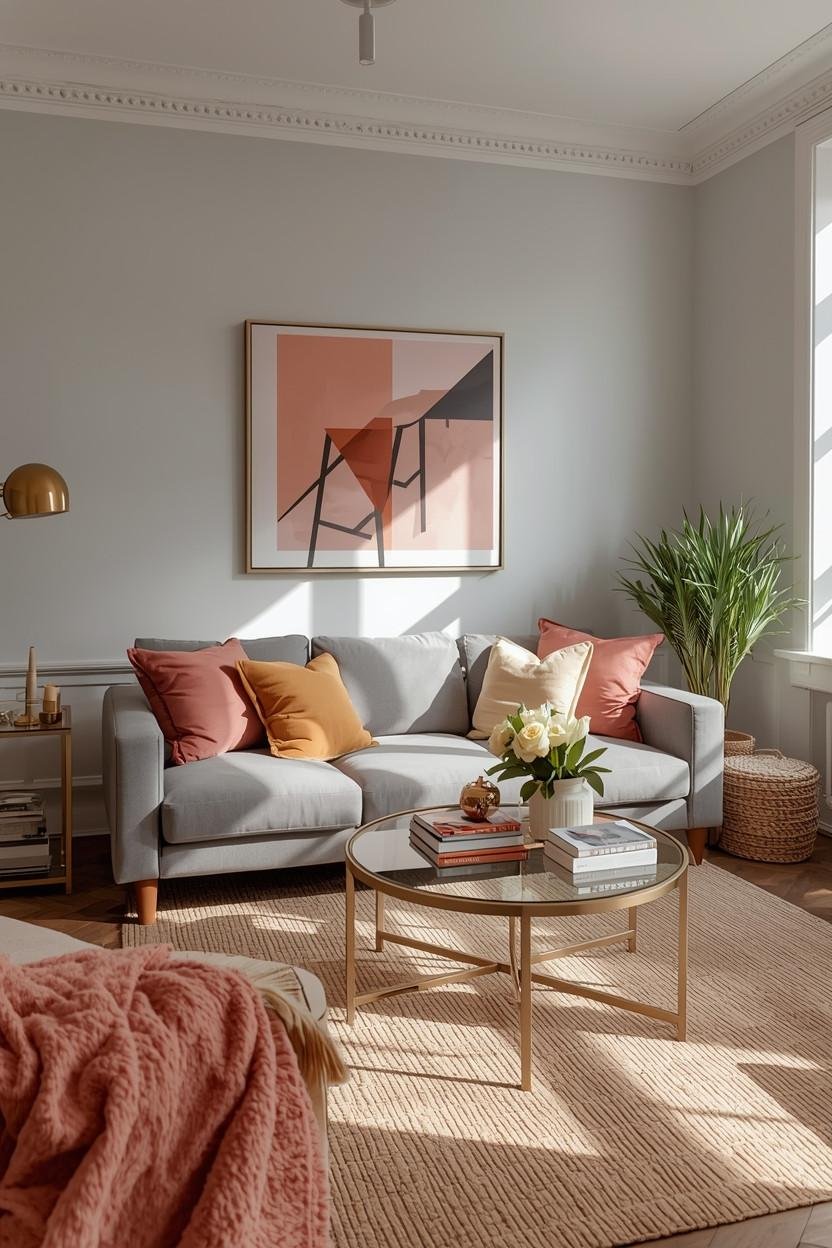
The biggest mistake people make is adding color randomly. Instead, create a color story.
Here’s How
Pick:
- One base (grey couch)
- One secondary
- One accent
Then repeat them everywhere:
- Pillows
- Art
- Rugs
- Books
- Decor
When color appears consistently, the room feels curated. When it appears once and disappears, it feels accidental.
Do a Quick Room Scan
Stand in your living room and ask:
- Does this color appear at least three times?
- Does anything feel out of place?
- Is there one clear focal point?
That quick scan saves you from cluttered chaos.
Quick Comparison: What to Avoid
Let’s be honest for a second. Most small apartment living rooms don’t fail because of the grey couch instead they fail because of color chaos.
❌ Too Many Bright Colors
Grey + pink + blue + yellow + green + purple? Well that will not work out.
When you mix too many bright shades in a small apartment, your eye works overtime. There is nothing special as everything yells to get your attention.
The small spaces require clarity, this is why If every object attempts to be the star, the room feels restless.
🤔 Ask yourself:
Would you wear six bold colors in a single outfit? Probably not.
The same applies to your living room.
❌ Tiny Pops of Random Color
One red pillow and nothing else red makes the room look confused.
Color needs support so when it appears once and disappears, it feels accidental.
Instead of adding a single bold item, repeat that color at least three times.
For example:
- Red pillow
- Red detail in artwork
- Red book on the coffee table
Now the color feels planned, not random.
❌ Dark Heavy Walls
Dark paint can make a small apartment look even smaller unless you are careful with it.
Large rooms can be very beautiful with deep navy or charcoal. They absorb light quickly in a small living room.
If you love dark tones, balance them with:
- Light rugs
- Warm lighting
- Mirrors
- Natural wood
Dark walls require intention and without it, the room can feel boxed in.
✅ What You Want Instead
- One bold accent
- Repetition
- Warm undertones
- Layered textures
- Clear focal point
Simple rules win every time. When you control color instead of scattering it, the space feels elevated. Smaller apartments do not require additional energy, they require smarter choices.
Best Color Combos with a Grey Couch (Cheat Sheet)
If you feel stuck, one of these safe yet trendy palettes will work:
- Grey + Mustard + Cream
- Grey + Emerald + Natural Wood
- Grey + Blush + Gold
- Grey + Rust + Beige
- Grey + Navy + White
Each combo works beautifully in a small apartment because it keeps things controlled.
Grey acts as the stabilizer while the other colors bring personality.
Why These Combos Work
Each palette follows a pattern:
- Grey = neutral foundation
- Bold color = personality
- Light or warm tone = balance
For example:
Grey + Mustard + Cream
Mustard adds warmth, cream softens the contrast.
Grey + Emerald + Wood
Emerald feels rich, natural wood prevents it from feeling heavy.
Grey + Navy + White
Navy adds depth, white keeps the room fresh.
When you combine bold + grounding + neutral, you create harmony.
Quick Tip for Choosing Your Palette
Go into your living room and look at your flooring.
If you have:
- Warm wood floors → lean into rust, olive, mustard
- Cool grey floors → lean into navy, teal, blush
Matching temperature makes everything easier.
My Personal Take
If I had a small apartment with a grey couch right now, I’d choose:
- Warm cream walls
- Rust pillows
- Blue art
- Woven natural rug
This is because that combo feels comfortable yet modern, while also adding personality to the room without overwhelming it.
Rust makes the grey warm, the blue makes it fresh and the woven rug makes everything soft.
I love this mix because it feels balanced and doesn’t shout nor it disappear.
And honestly, small apartments don’t need more stuff, they need better styling.
Why These Ideas Work So Well in Small Apartments
Small spaces magnify mistakes which means too many colors will feel cluttered and too little color feels dull.
The sweet spot sits right in the middle.
Grey Is the Perfect Starting Point
Grey couches actually help you hit that sweet spot because they don’t compete, they support.
They enable the chance to shine bold colors without conflicting with each other, reduce warm colors, soften the bright accents, and modify without any problems as soon as trends change.
That flexibility makes them ideal for renters and apartment living.
Small Rooms Need Structure
In large homes, you can get away with experimentation while In small apartments, you need structure.
That structure comes from:
- A defined color palette
- Clear focal points
- Balanced proportions
- Open space
When you follow those principles, even bold color feels controlled.
Confidence Is the Final Ingredient
Once you pick a palette, commit to it.
Don’t second-guess every pillow or keep adding new colors mid-way.
Confidence makes design look intentional.
And believe me, as soon as you repeat your accent color around the room, your grey couch will no longer be considered as a “boring one”, but rather a well-groomed one.
Final Thoughts
Your grey couch is not boring as you think but it’s stable, adaptable and gives you freedom. In a small apartment, that freedom matters.
When you:
- Follow a clear 3-color rule
- Add warmth through texture
- Create a bold focal point
- Balance cool and warm tones
- Use vertical space
- Keep furniture neutral
- Edit before adding
You turn a basic grey couch into a foundation for something beautiful and we know small spaces reward intention while punish randomness.
So don’t overwhelm your living room. Guide it.