Every DIY home decor guide on the internet promises the same thing – cheap, easy and beautiful. And then you spend a Saturday afternoon making something that looks like a school science project.
Well, the issue is almost never the effort or the budget, it is that most DIY decor advice skips the part where they tell you what makes something look expensive versus what makes it look like it belongs at a craft fair table.
It usually comes down to materials, finish and a bit of restraint. The best DIY decor doesn’t look DIY, it just looks like you’ve got good taste (and maybe a little extra cash) without actually spending much.
These 12 DIY Home Decor Ideas cover projects across skill levels, price points and rooms. All of them are beginner-friendly and none of them require power tools.
Table of Contents
1. Paint an Accent Wall – But Pick the Right Wall
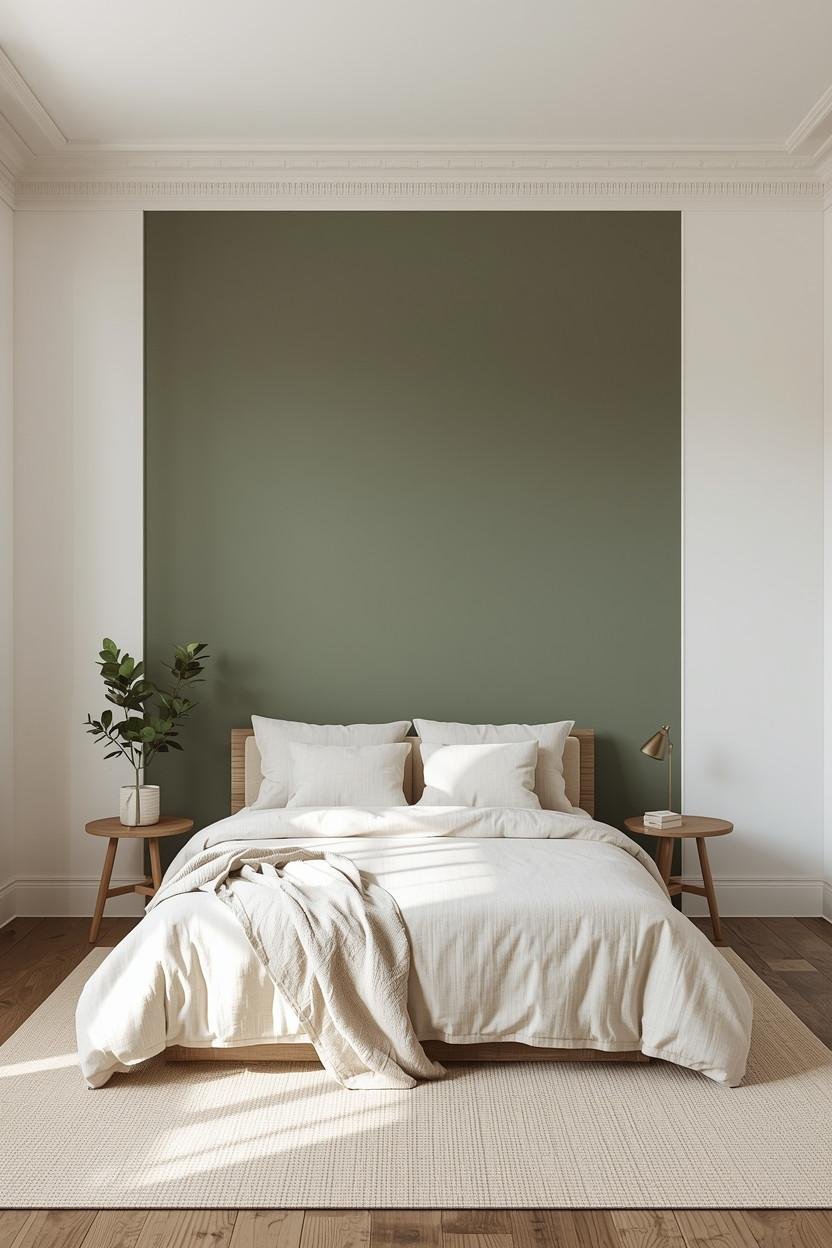
Painting the biggest wall feels like the obvious move – more space, more impact, right? But it is rarely the right choice. It often makes the room feel smaller and heavier instead of adding that clean, dramatic effect.
The wall that works best for an accent wall is the one that frames the main furniture arrangement from the natural entry point.
In a bedroom, that is usually the wall behind the headboard. In a living room, it is typically the wall the sofa sits against or the fireplace wall if there is one.
📏 Proportion Rule:
An accent wall should be about 1.5 to 2 times wider than it is tall for the best result. Once you choose the right wall, the color does the rest.
Deep sage green, dusty terracotta, or warm navy in a matte finish can instantly feel more elevated than a standard white room.
2. Make No-Sew Throw Pillow Covers
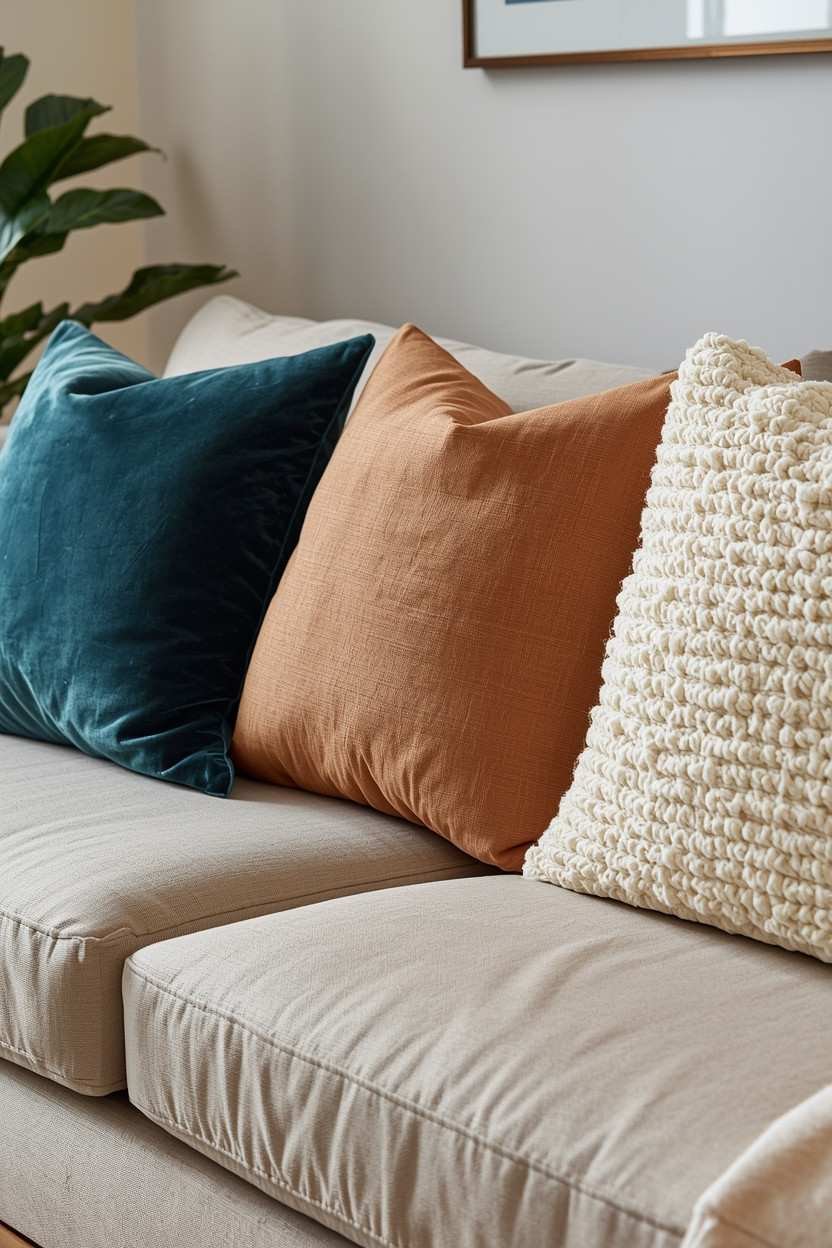
New throw pillows are an easy way to refresh a room… and an easy way to waste $50 on something that still feels off. Envelope-style pillow covers fix both like no sewing, no zippers – just fabric and an iron (or even fabric glue).
Cut your fabric to the right dimensions, fold and press the envelope overlap, secure it and you have a pillow cover that looks completely custom.
The secret to making these look expensive is the fabric choice such as velvet, linen and boucle all photograph and feel significantly more elevated than cotton canvas.
What Fabrics Work Best
| Fabric | Why It Works |
|---|---|
| Velvet | Adds texture and richness, especially in jewel tones |
| Linen | Airy and natural, fits almost any room style |
| Bouclé | Trendy in 2026, adds cozy texture |
| Vintage Fabric / Tea Towels | Thrifted, unique and perfect for one-of-a-kind pieces |
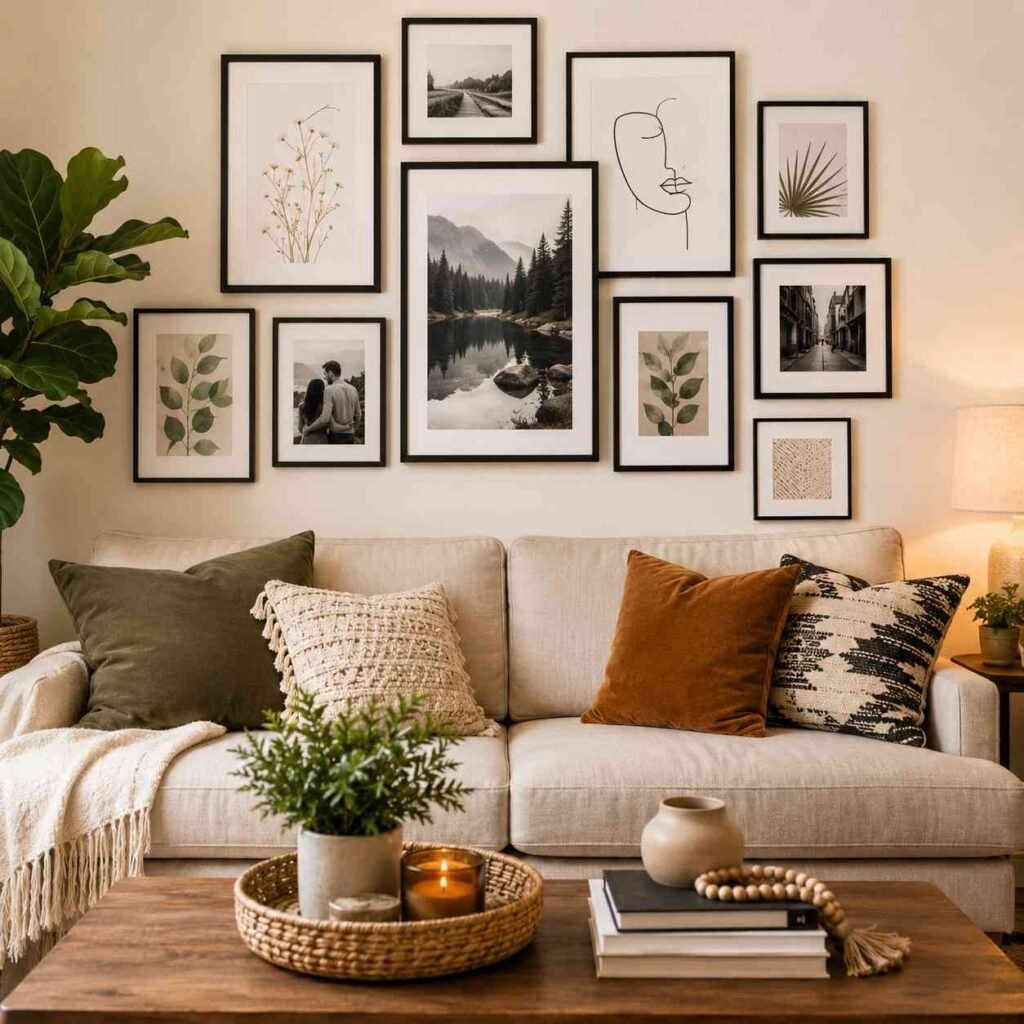
3. Create a Gallery Wall with the Grid Method
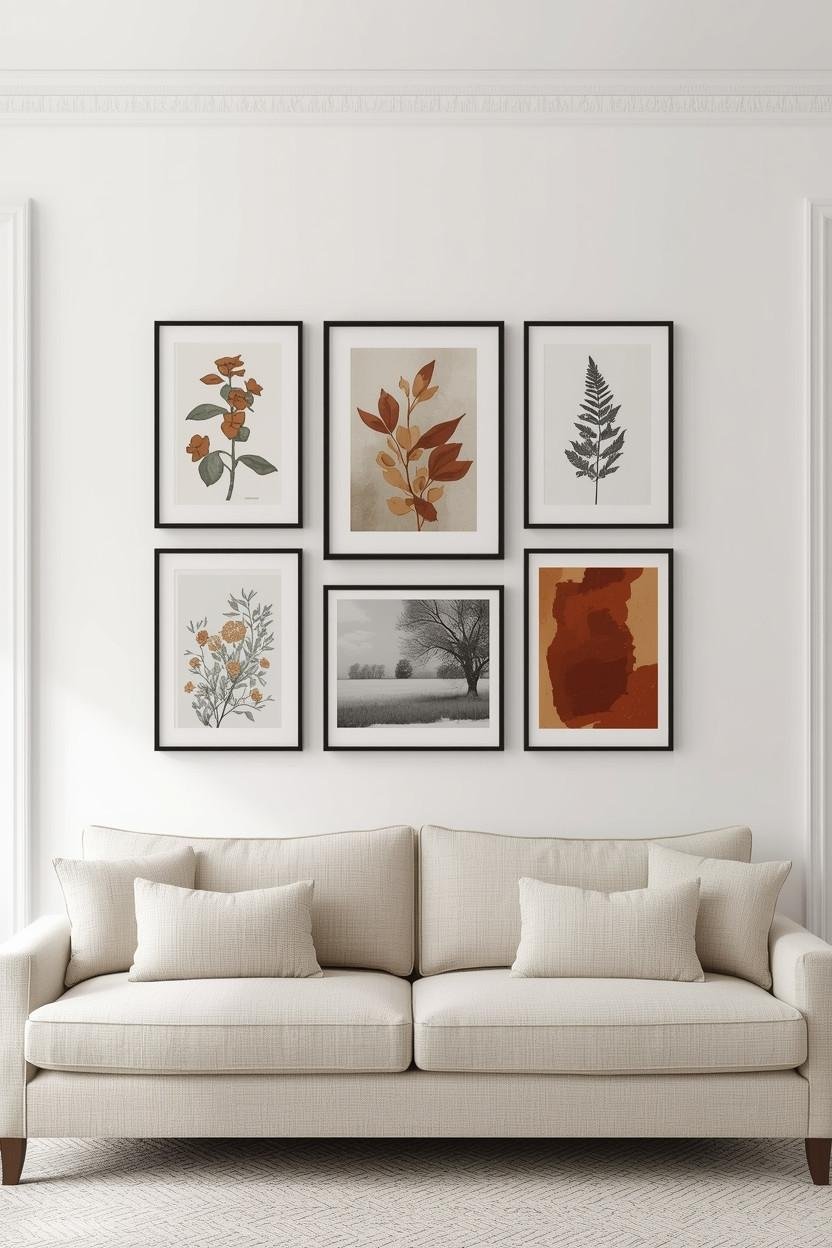
Gallery walls get a bad reputation for being complicated. But they are not.
The issue is that most people eyeball the spacing and end up with something that looks uneven and scattered. The grid method removes all the guesswork.
Lay your frames out on the floor first and play around until it feels right. Then measure the overall width and height. Mark the center of that layout on your wall and start hanging from the middle outward.
Keep spacing even (around 3 inches is a safe go-to).
🎯 Keep It Cohesive:
The frames don’t need to match exactly but they should share something. Keep one element consistent, whether it is color (all black, brass or white) or shape. That single thread ties everything together.
4. Style a Coffee Table Using the Designer Formula
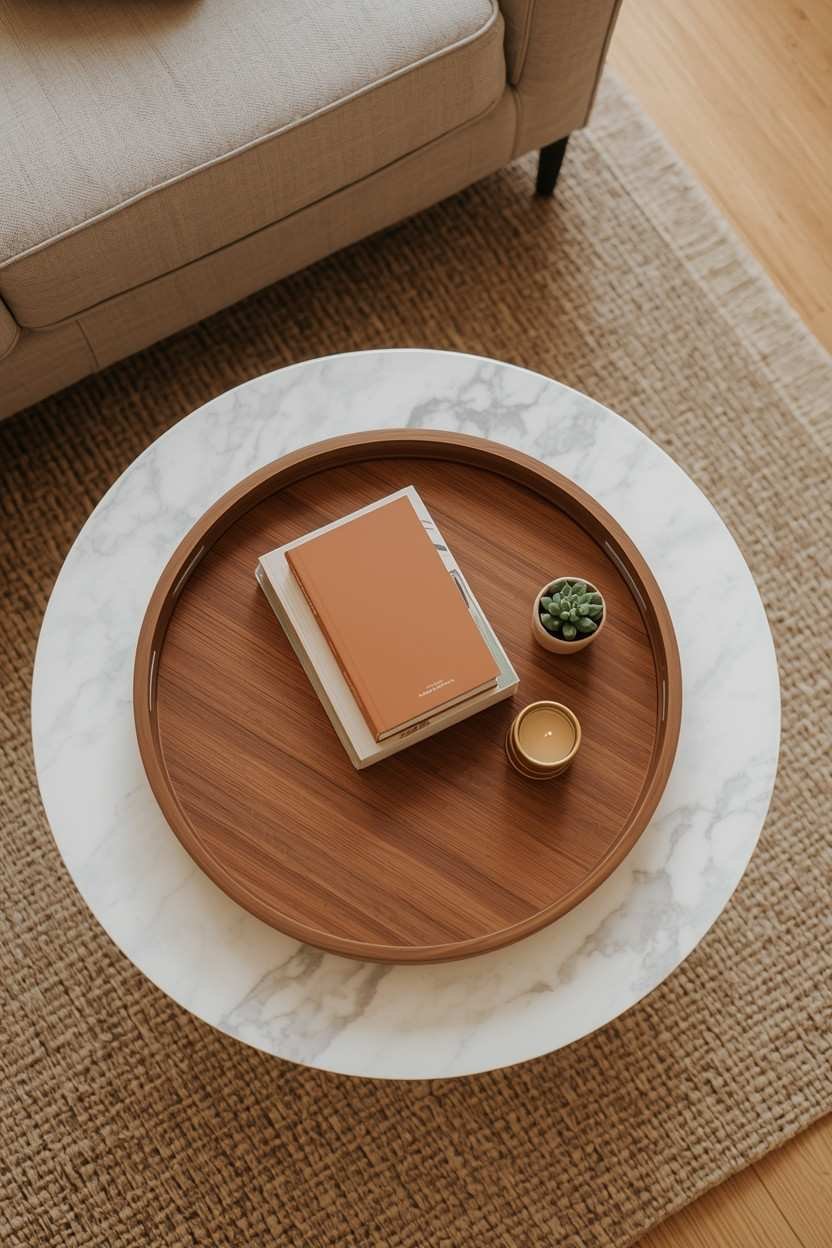
A coffee table with random items on it looks like clutter but one styled with the right combination of items looks like a design choice. The difference is a formula and once you know it, every surface in your home benefits from it.
🧩 The Formula:
One tray to contain and anchor, a stack of 2-3 books for height variation, one candle or sculptural object and one organic element like a small plant or dried flowers. That’s it – four elements in a tray.
The tray is what makes the whole thing look purposeful and anything inside a tray becomes a curated collection. The same three objects without a tray just look like stuff sitting on a table.
5. Hand-Roll a Clay Dish or Object
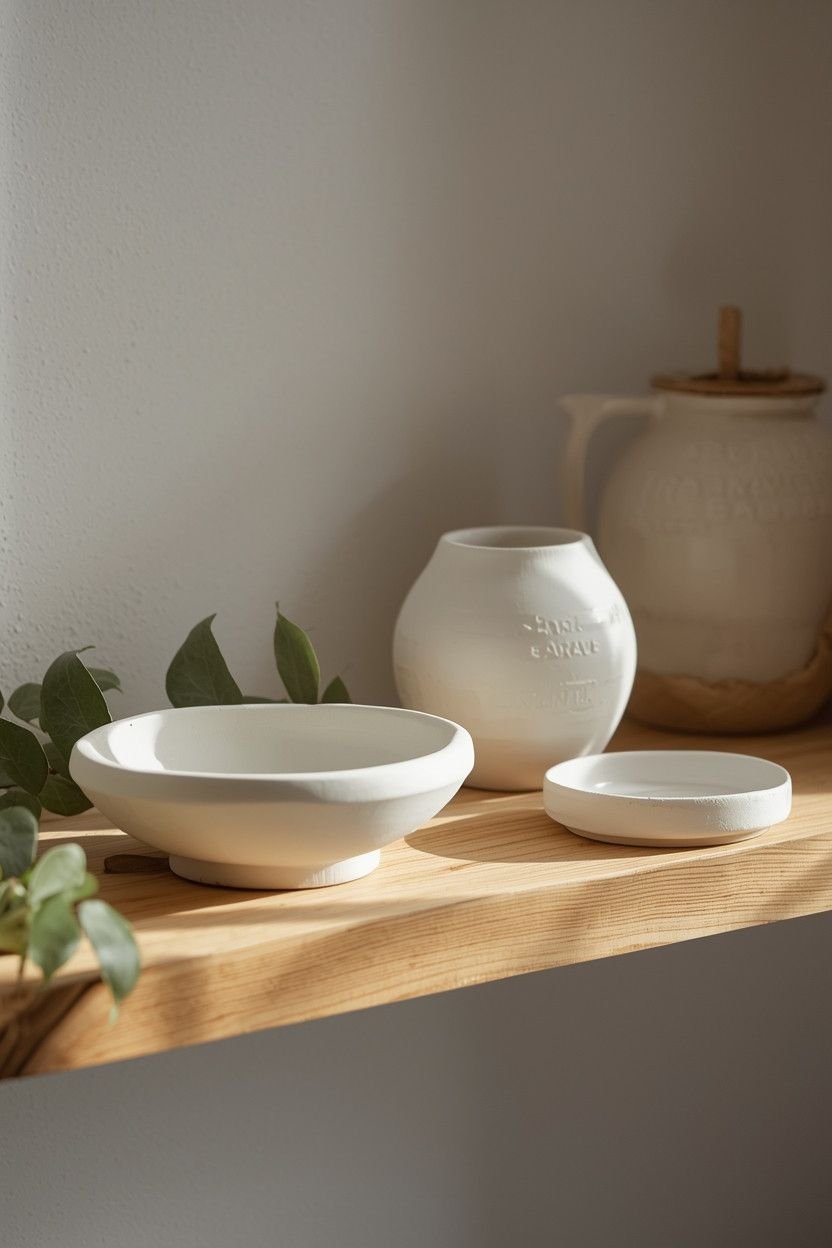
IMO, air-dry clay is one of the most underrated DIY materials in home decor right now. A small pinch pot, a ring dish, a tapered vase anything you shape by hand immediately reads as an artisan object, not a DIY project.
And those little imperfections, those soft uneven edges? They’re not mistakes but exactly what makes it feel real and beautiful.
Crayola Model Magic air-dry clay from any craft store runs about $8 for a pack that makes three or four small pieces. Roll it, shape it with your hands, smooth it with a damp finger and let it air-dry for 24 hours.
Once dry, you can leave it white, paint it or add a glaze-like finish with a coat of watered-down PVA glue.
6. Refresh Old Furniture with Chalk Paint
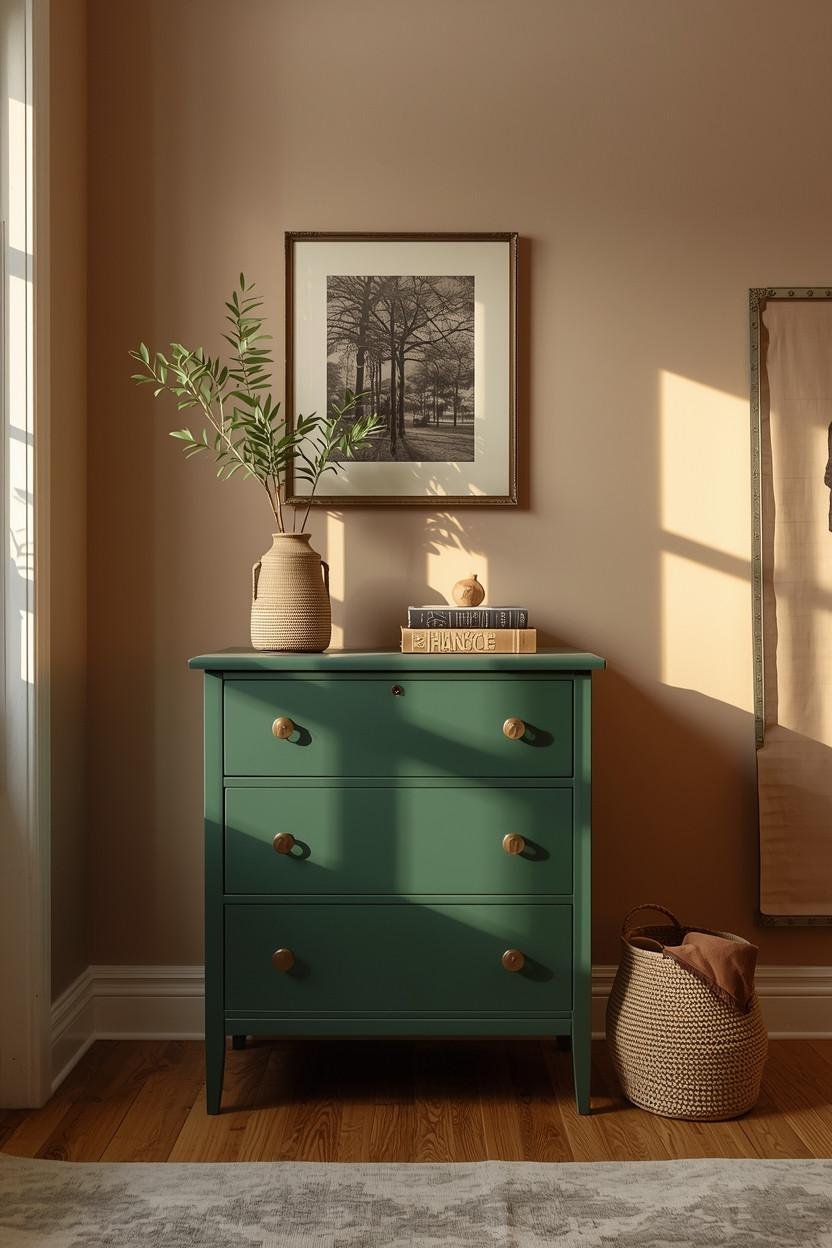
I used to think painting furniture meant sanding, priming and a bunch of skill I didn’t have – so I avoided it for years.
Then chalk paint changed everything. It sticks to almost any surface without sanding or primer, has barely any learning curve and still gives that fully custom, boutique finish.
A piece of furniture that cost $15 at a thrift store with a coat of chalk paint in a good color (deep forest green, warm terracotta, dusty rose) and a coat of clear wax to seal it becomes something people assume you paid significantly more for.
This is also how you make mismatched furniture feel intentional. Two completely different pieces, painted in the same chalk paint color suddenly look like they were meant to go together and not like an accident you’re trying to hide.
7. Make a Basic Macramé Wall Hanging
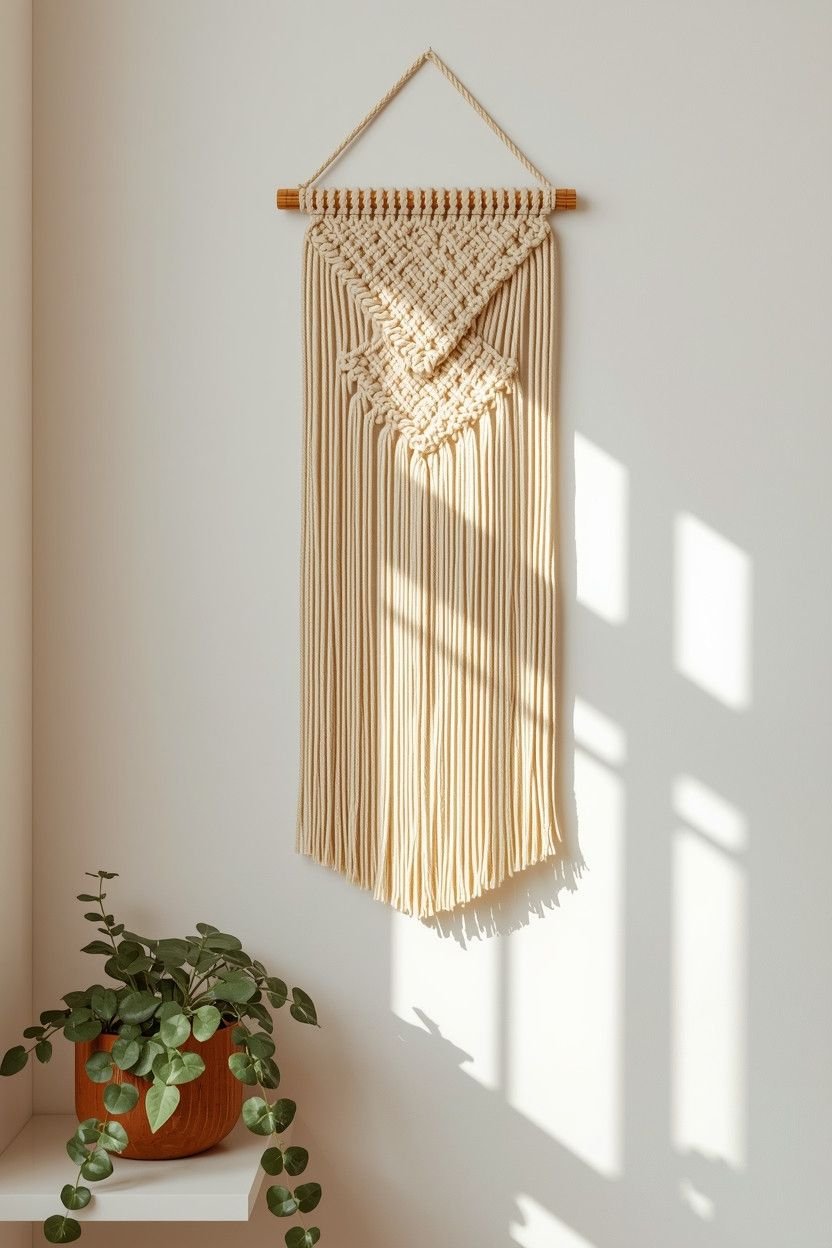
Macramé sounds intimidating until you realize most wall hangings are built from just two knots: the square knot and the lark’s head.
You can learn both in about 15 minutes on YouTube and from there you can create pieces that sell for $80+ at markets with maybe $15 worth of materials.
Cut your rope about four times the finished length you want. Fold each strand in half, loop it over a wooden dowel using a lark’s head knot and start knotting. A 12-inch wide, 24-inch long piece is a perfect first project.
✂ Simple Materials:
Natural cotton macramé cord, a 12-inch wooden dowel and scissors – that’s the full list for something that looks far more labor-intensive than it actually is.
8. Paint Terracotta Pots in Bold Colors
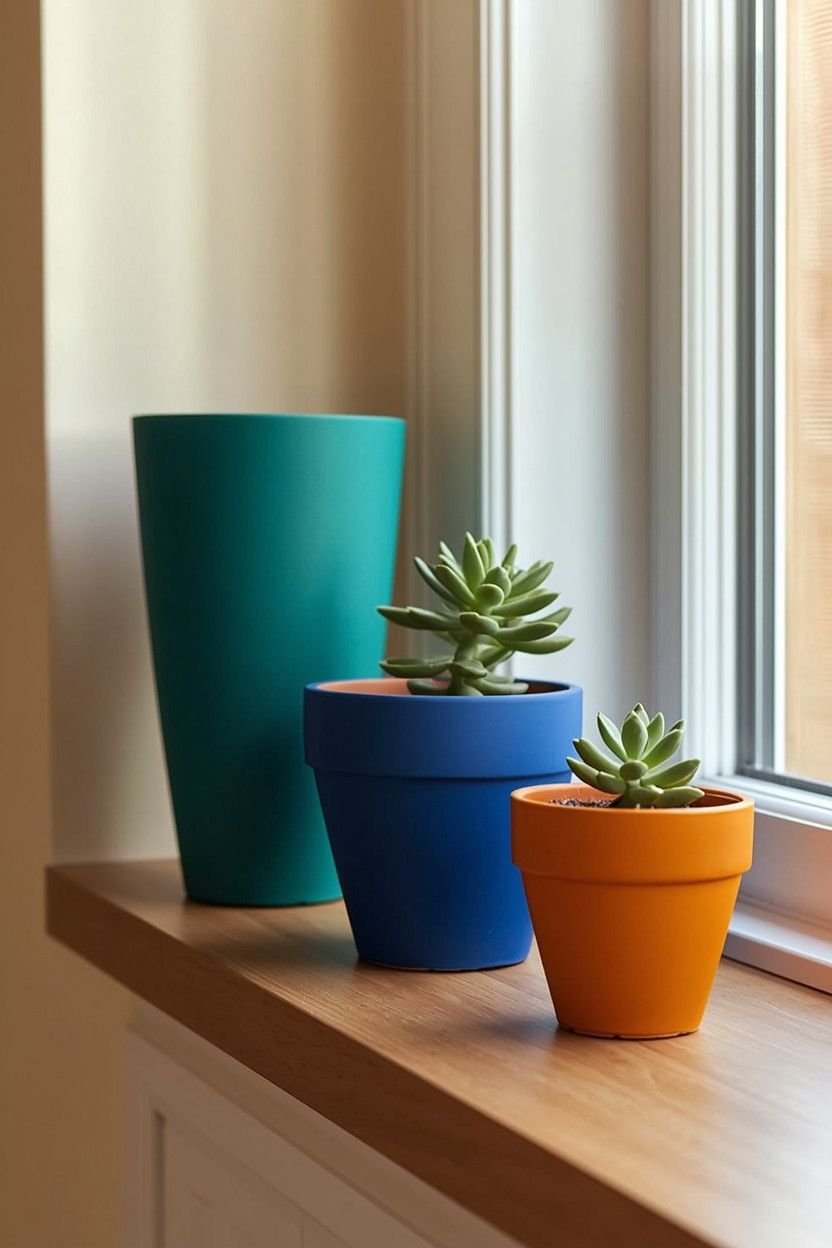
A plain terracotta pot costs about a dollar and a terracotta pot painted in a bold, saturated color with a coat of acrylic paint costs about a dollar and forty-five minutes. The latter looks like something from an artisan ceramics shop.
The colors that instantly make painted pots look intentional: deep teal, warm terracotta (a bit richer than natural clay), sage green, cobalt blue and warm mustard.
Do two coats on the outside, keep the inside raw, then seal it with a clear acrylic varnish so the paint doesn’t chip when you water them.
Group three pots of different sizes together on a shelf or windowsill – one tall, one medium, one small. The size variation and the color family they share turns them from painted pots into a collected display.
9. Hang Curtains from Ceiling Height
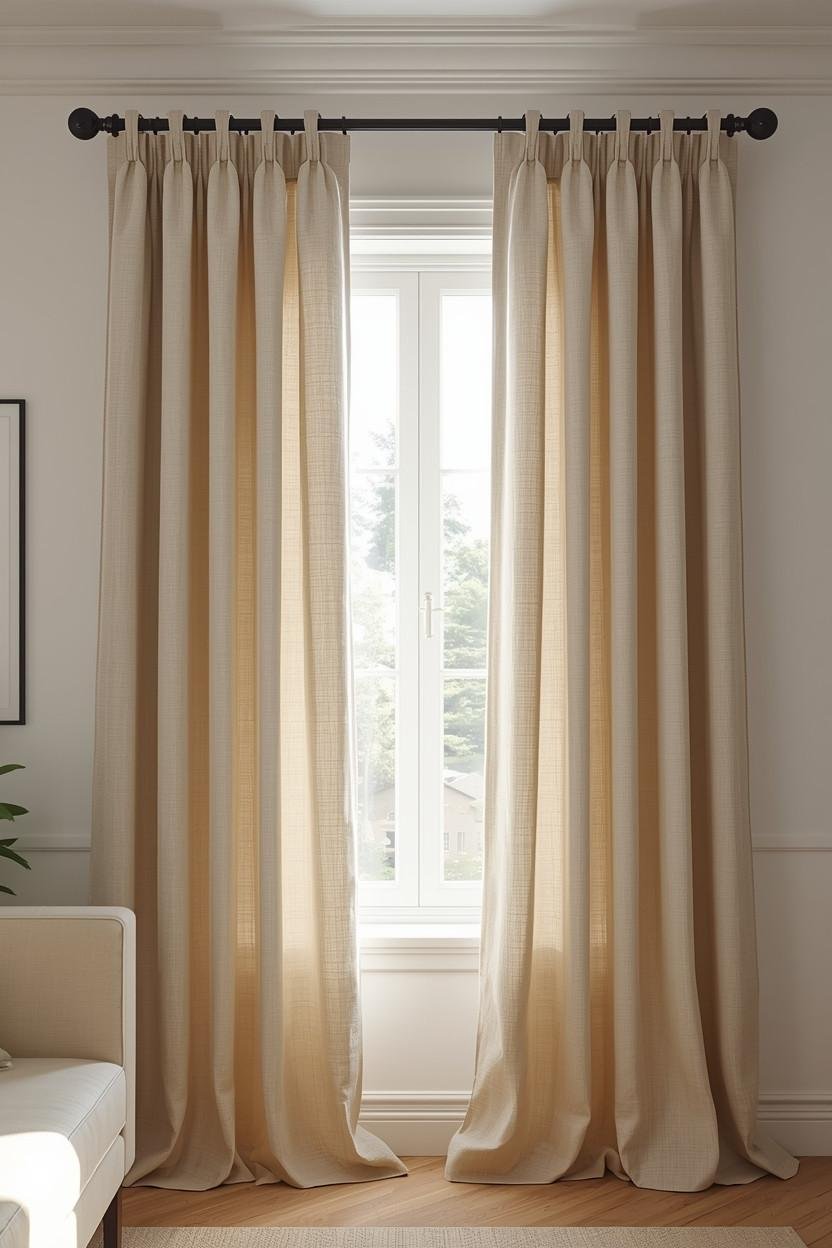
Standard curtain advice says to hang the rod above the window frame. Better curtain advice says to hang the rod as close to the ceiling as possible or directly at ceiling height if you can manage it.
The difference this makes is dramatic because floor-to-ceiling curtains make a room feel significantly taller, windows feel significantly more architectural and the whole space feel more intentional.
The fabric matters here too and the reason is that heavy linen or velvet that pools slightly on the floor looks expensive. Thin polyester that stops exactly at the floor looks like a rental. The extra $15 for heavier fabric is always worth it for this particular upgrade.
10. Add Peel-and-Stick Shiplap to One Wall
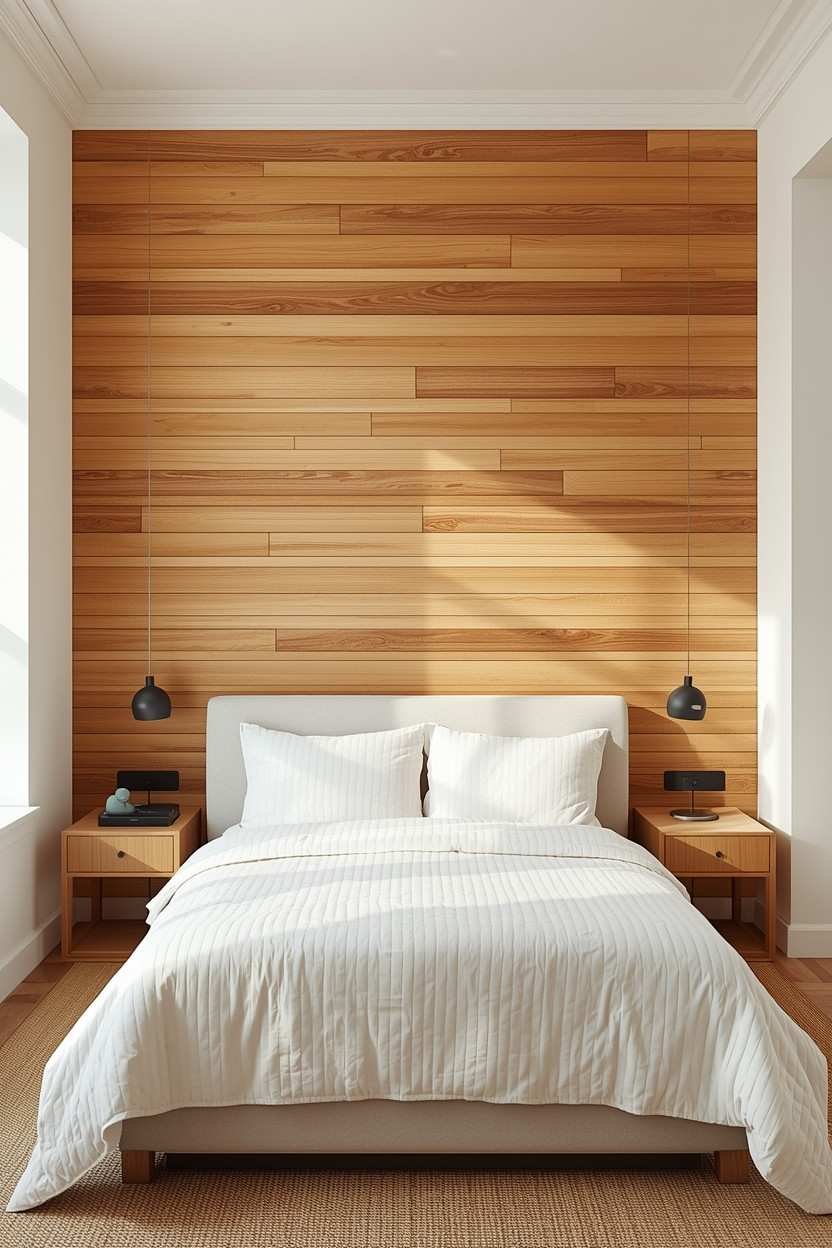
Real shiplap needs tools, skills and usually a landlord’s permission.
Peel-and-stick shiplap skips all of that and when it is done on a single wall, it is often almost indistinguishable from the real thing in most lighting.
Stikwood peel-and-stick wood planks from Amazon run around $30 per pack and cover roughly 5 square feet per pack. Start at eye level and work outward, trim with scissors at the edges and finish with a matching paint color or leave the natural wood tone.
💡 Design Upgrade:
One wall of textured wood planking behind a bed or sofa adds an architectural quality that flat painted walls simply can’t replicate and it costs a fraction of what a contractor would charge for the same effect.
11. Create a Decorative Plate Wall
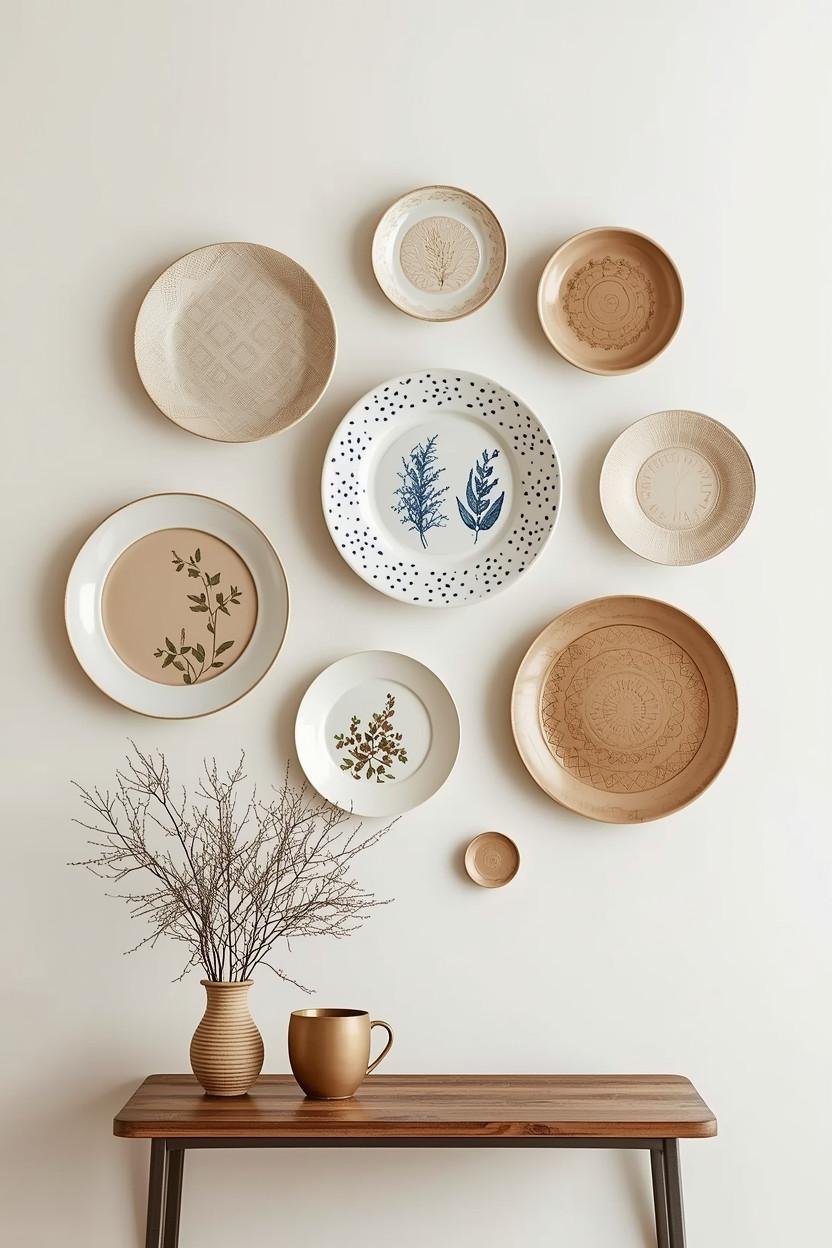
My first thought hearing “plate wall” was my grandma’s china cabinet and not the vibe I wanted. But when done right (mixed sizes, tight color palette and vintage patterns), it becomes one of the easiest and most impactful DIY wall upgrades.
Thrift stores and charity shops are goldmines for character-filled plates. Stick to one color family like warm earth tones, blues and whites or creams and naturals but mix up the patterns and sizes for that collected look. Use adhesive plate hangers from any hardware store to mount them securely without drilling.
Arrange the whole collection on the floor before committing anything to the wall. Move pieces around until the composition feels balanced. Then transfer the arrangement piece by piece.
12. Make a Rope or Jute Basket
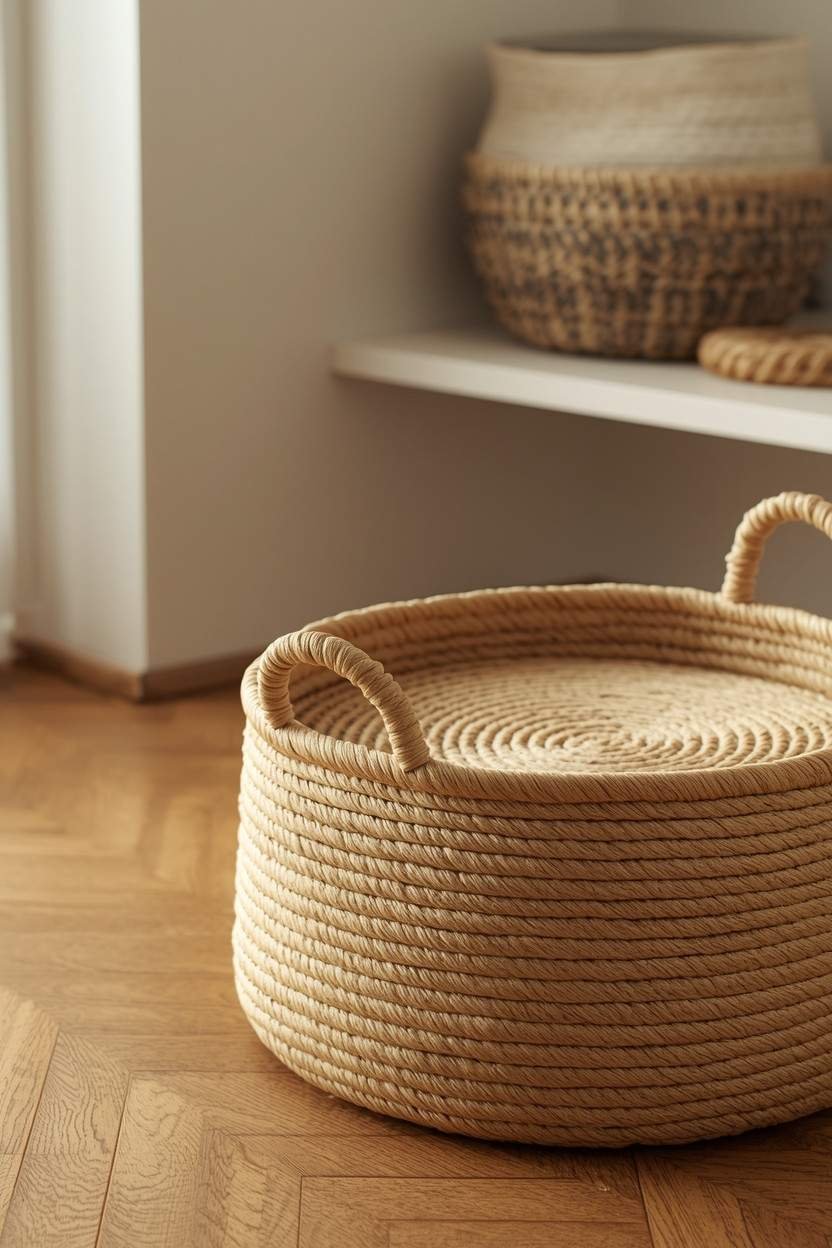
A woven basket that looks like it came from a boutique home goods store can be made with a few yards of jute rope and a hot glue gun in about an hour.
The Technique is Simple: coil the rope in the shape you want, gluing each loop to the one below as you go.
Start flat for the base, then gradually build upward along the edges to form the sides. For a more uniform shape, use a can or bowl as a mold to wrap around. Finish by adding handles – simply loop a shorter piece of rope and secure it with glue on each side.
The result looks like something that looks like a boutique purchase and costs almost nothing in materials. And since jute is a natural material, the slight imperfections in hand-coiling add to the look rather than detracting from it.
Quick Reference: Project Cost and Difficulty
| 🛠 Project | 💰 Cost | ⏱ Time | ⭐ Skill Level |
| DIY Pillow Covers | Under $15 | 30 min | Absolute beginner |
| Coffee Table Styling | Under $20 | 20 min | Zero skills needed |
| Clay Dish/Object | Under $10 | 1 hour | Beginner |
| Painted Terracotta Pots | Under $10 | 45 min | Beginner |
| Decorative Plate Wall | Under $25 | 1 hour | Beginner |
| Jute/Rope Basket | Under $8 | 1-2 hours | Beginner |
| Macramé Wall Hanging | Under $20 | 2-3 hours | Beginner-intermediate |
| Gallery Wall | Varies | 2 hours | Beginner |
| Chalk Paint Furniture | Under $30 | 2-4 hours | Beginner |
| Floor-to-Ceiling Curtains | Under $40 | 30 min | Beginner |
| Peel-and-Stick Shiplap | Under $50 | 2-3 hours | Beginner |
| Accent Wall Paint | Under $40 | 4-6 hours | Beginner |
Start With Just One
The most common mistake with DIY home decor is trying to do too many projects at once and ending up with nothing finished. Pick the one idea on this list that solves your most pressing room problem and start there.
One well-executed project changes how a room feels more than five half-finished ones. And once you finish something that actually looks good, the rest of the list becomes significantly more appealing to work through. 🙂