My first apartment was 380 square feet and that is not a typo. I had a bed three feet away from the stove, one window facing the brick wall and a bathroom where you could brush your teeth and kick the other wall without really trying.
The initial few weeks were spent in accepting it. Then I began to sort things, experiment, make a lot of mistakes and gradually… the place improved.
What I got to know is that small spaces are not small because they are small. They become small due to certain decisions.
When you try to push everything against the walls, add a lot of stuff and block the windows then your small 600 square foot apartment starts to feel like a closet.
Make the right decisions and the same room seems to have room to breathe. The following are the 21 small space decor ideas that feel big and literally shifted the needle in my case.]
Table of Contents
1. Go Vertical with Your Storage
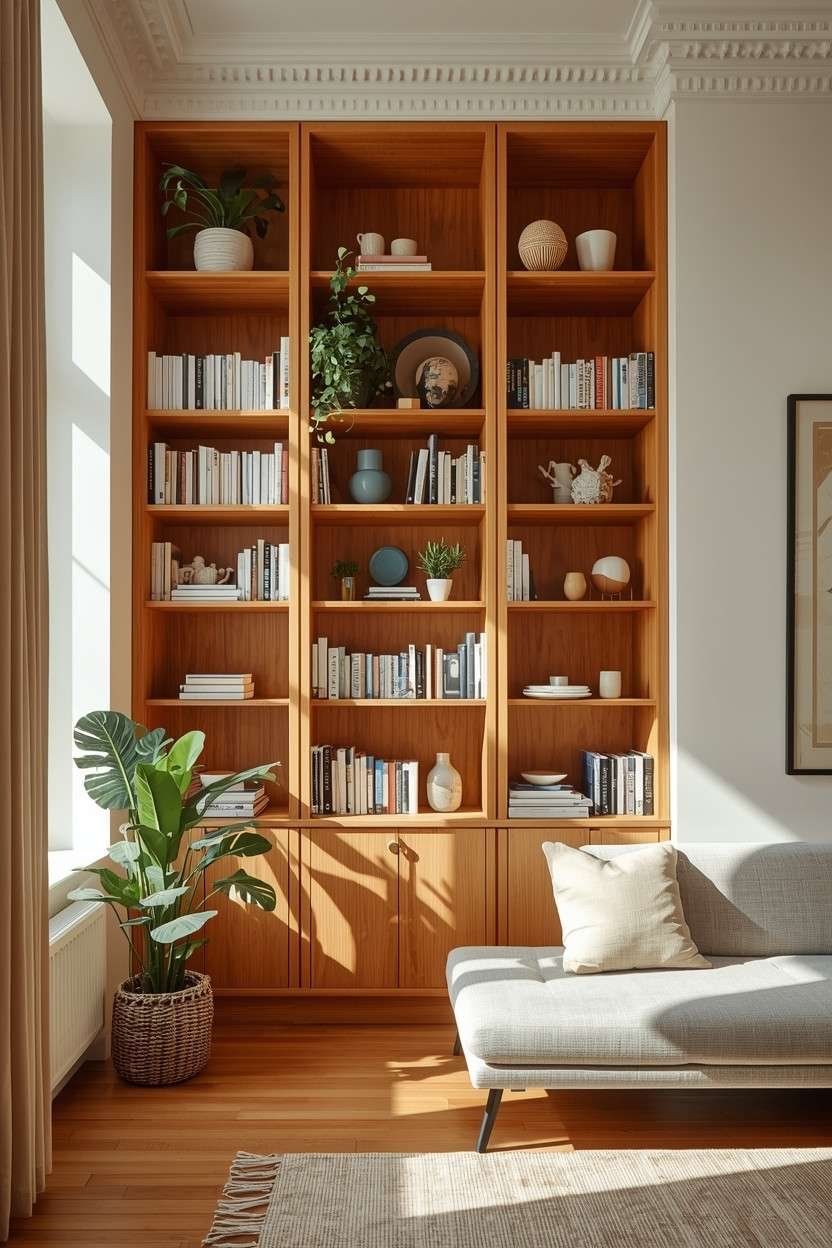
My first instinct in every small room I’ve had was to spread things out horizontally like low shelves, wide console tables and stuff arranged across the floor. The room always ended up feeling more cramped, not less.
The fix is looking up where floor-to-ceiling shelving holds the same amount of stuff as a wide, low bookcase. But what it does is it draws your eye upwards, and the ceiling suddenly feels much further away than it actually is. The room gains height without you touching a single wall.
Go all the way to the ceiling if you can and leave the top shelves lighter. Keep fewer objects and more open space so the room doesn’t feel crowded up high.
🖊 Personal Note: Try to mix open shelves with closed ones so you are not displaying everything you own.
2. Use One Big Mirror (Not Five Small Ones)
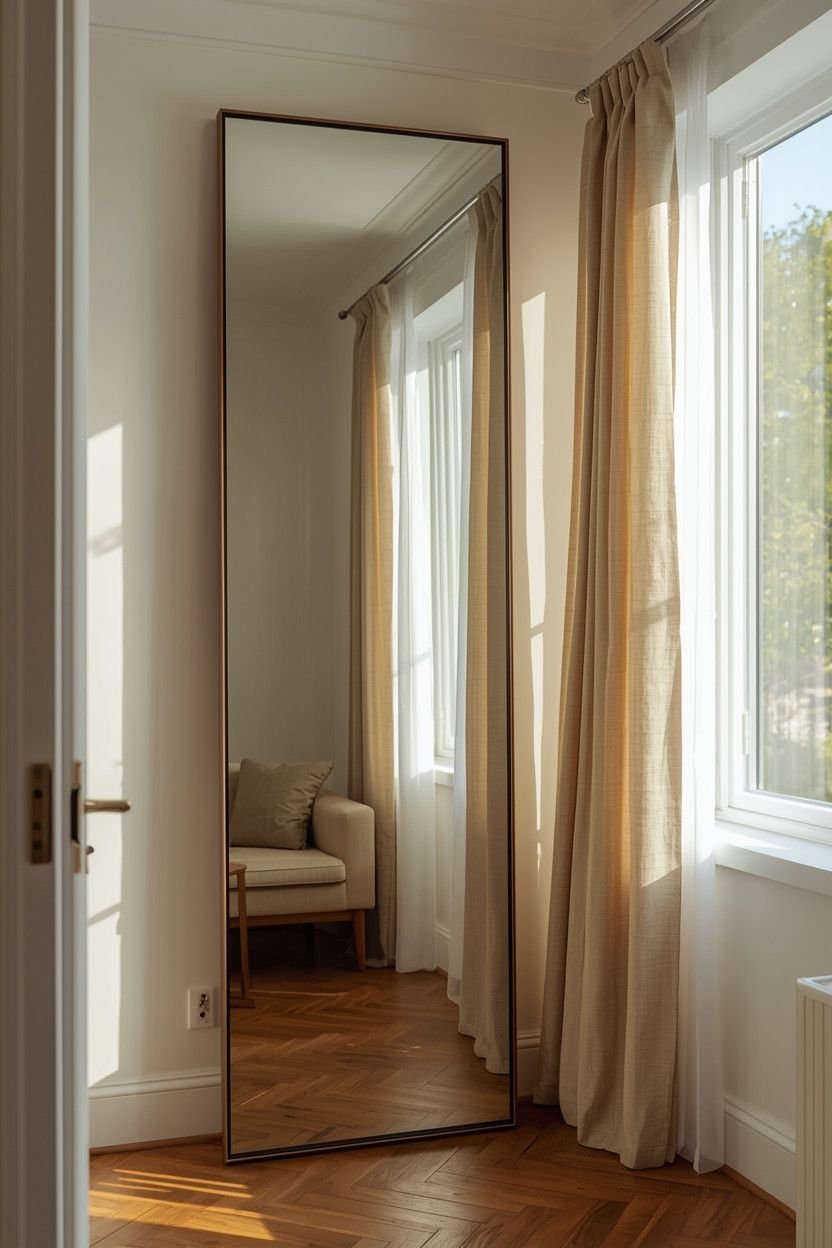
Ever walked into a tiny room that somehow felt spacious and couldn’t figure out why?
90% chance there was a large mirror doing the heavy lifting. A well-placed mirror bounces light across the room and creates a sense of depth that’s hard to explain until you see it yourself.
Hang it directly opposite your main window – not beside it or on an adjacent wall, but directly across so that it catches the incoming light and throws it back.
A friend came to my old flat and kept asking why it felt ‘weirdly bright‘ for a north-facing room. Well, that was the mirror – the whole explanation.
And skip the five small decorative mirrors arranged in a gallery cause they look busy and do nothing for the room size. One gorgeous statement mirror placed with that specific logic is all you need.
3. Make Every Piece of Furniture Pull Double Duty
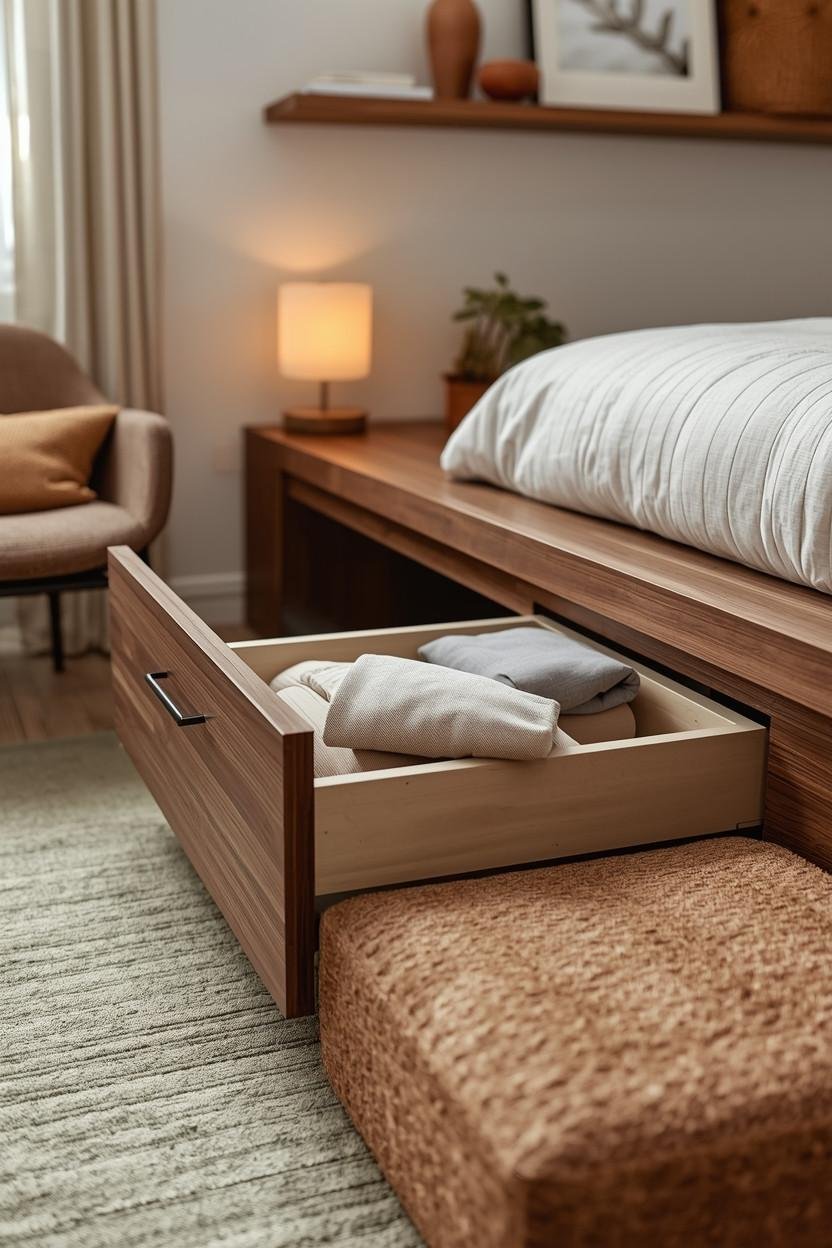
If you are still using a regular coffee table with nothing under it then you’re wasting a furniture slot (respectfully). In a small room, every piece needs to earn its floor space and believe me that is not a style philosophy, it’s just the math of limited square footage.
Now think ottomans with storage inside, beds with built-in drawers, dining tables that fold flat against the wall and also the sofas with hidden compartments.
Small apartments are on the rise and a survey conducted in 2024 showed that the average size of an apartment in the U.S. was approximately 908 square feet.
Hence the reason many people are using smart layouts and multifunctional furnishings to use the most out of the limited space they have.
The good news is that multi-functional furniture looks just as nice as regular furniture when you choose it well. It just means there is somewhere for everything to go instead of things piling up on surfaces.
4. Stick to Light Colors (But Not Because You Have To)
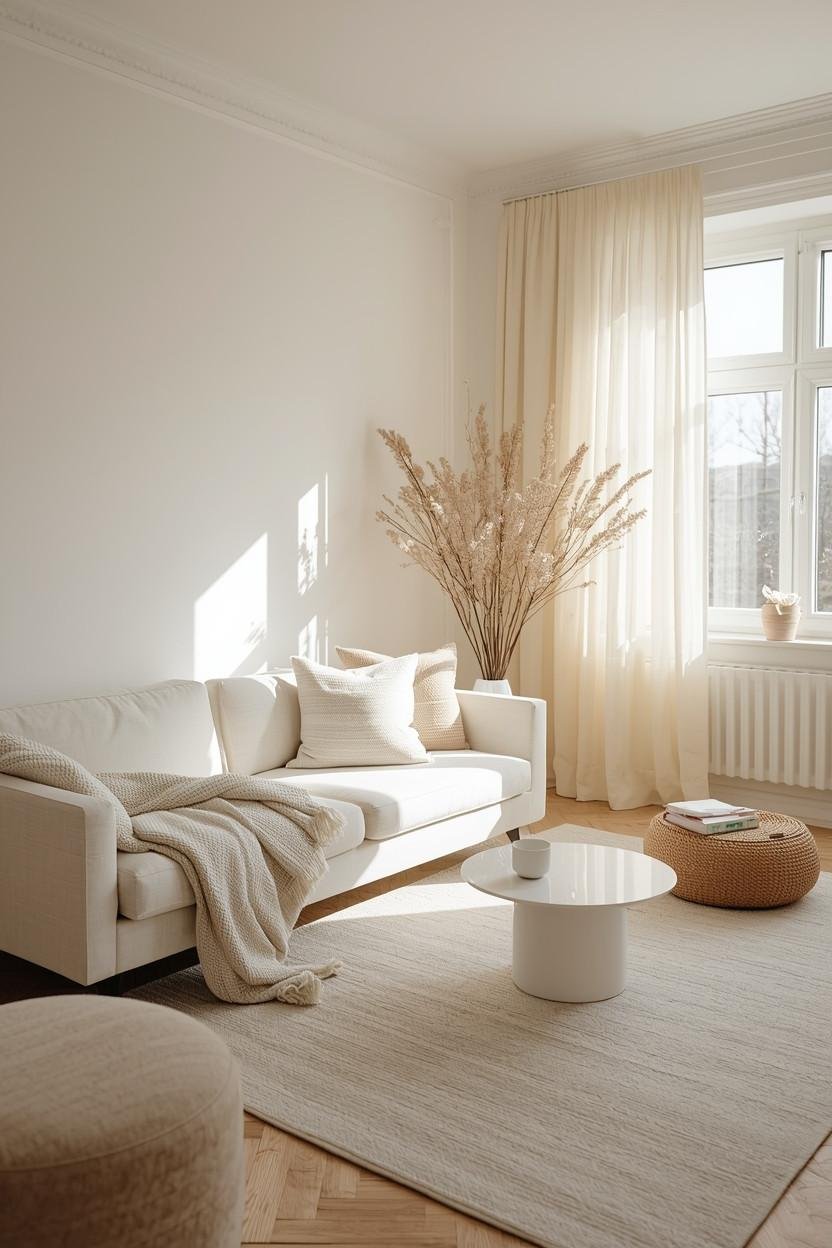
I used to resist this one hard that dark walls look incredible in the right room and I didn’t want to be the person who just painted everything white because the internet told them to. But after living in a dark-walled small room for a year, I get it.
Dark colors absorb light and the walls start moving inward where the soft whites, warm creams and light grays bounce light back and open the room up in a way you feel immediately.
‘Light‘ doesn’t have to mean boring as you can also layer different shades of the same tone, add texture through fabrics and bring in one or two deeper accent pieces.
💡 Tip: Match your bigger furniture to your wall color where you can like a sofa that blends into the wall behind it stops the room from feeling cluttered even when it is full.
5. Stop Blocking Your Windows
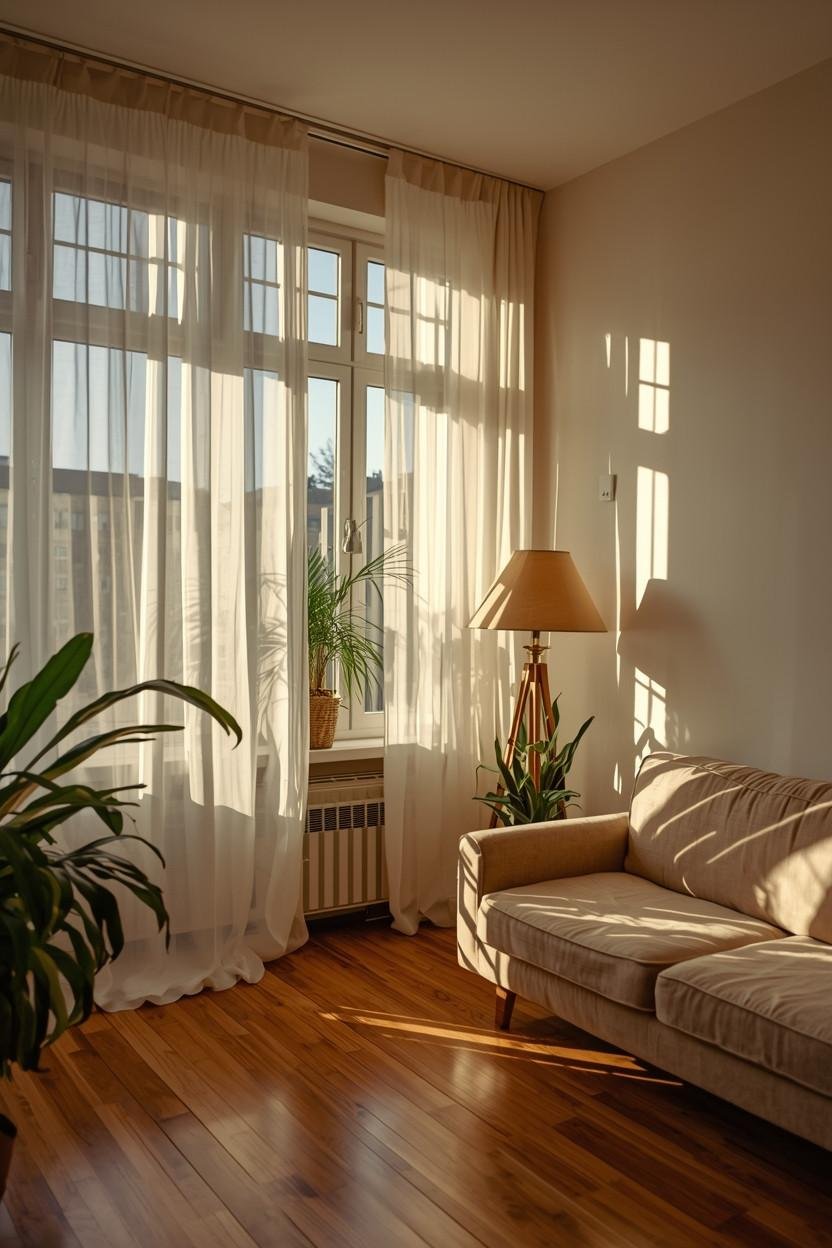
FYI heavy curtains half-drawn across your windows are basically a crime against small rooms. Natural light is the one resource that costs nothing, and most people actively block it with thick drapes they never fully open anyway.
Swap them for sheer panels or Roman shades that pull all the way up to let the outside in. Natural light does things for a room that no lamp can replicate and makes colors look truer, distances look further and the whole space feels less enclosed as well.
At the same time, you can try adding warm-toned floor lamps or table lamps in any dark corners as they shrink rooms so a lamp in the corner expands them. Layer your lighting instead of relying on one overhead fixture that flattens everything.
6. Declutter on a Weekly Basis
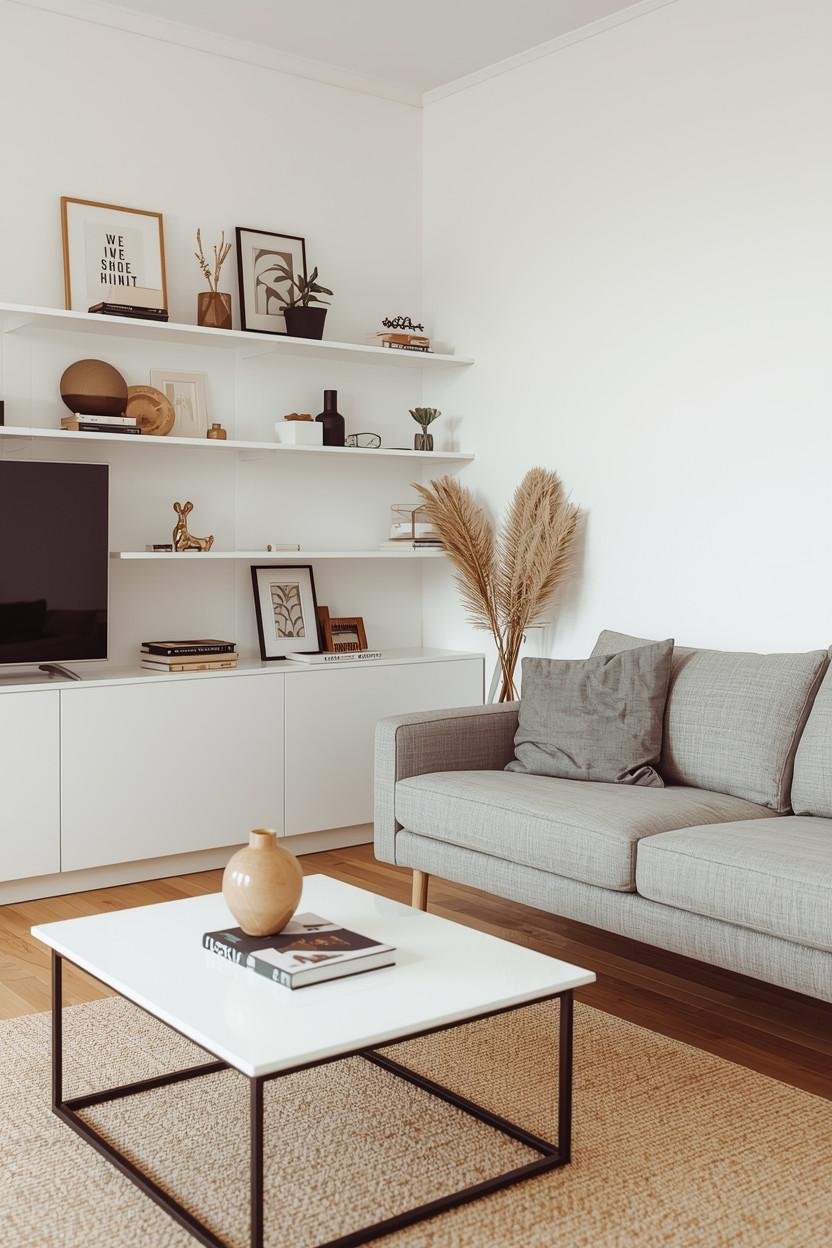
A big January declutter doesn’t fix anything by February. Things pile up such as packages, gifts you didn’t ask for, things that didn’t go away. That room that felt spacious after your big clean-out shrinks back within weeks because habits never changed.
The system that actually works is a ten-minute surface pass every week. Not deep cleaning, just moving things back to where they live before they’ve had time to become permanent residents.
✂ Remember That: A small room with ten well-chosen things looks open instead of the same room with thirty random things that looks like a storage problem someone gave up on.
The simple rule is to let the clutter out first, then decorate. Buying more things to organize the chaos rarely fixes the chaos, it does the opposite and just adds one more thing to organize.
7. Use Rugs to Create Zones
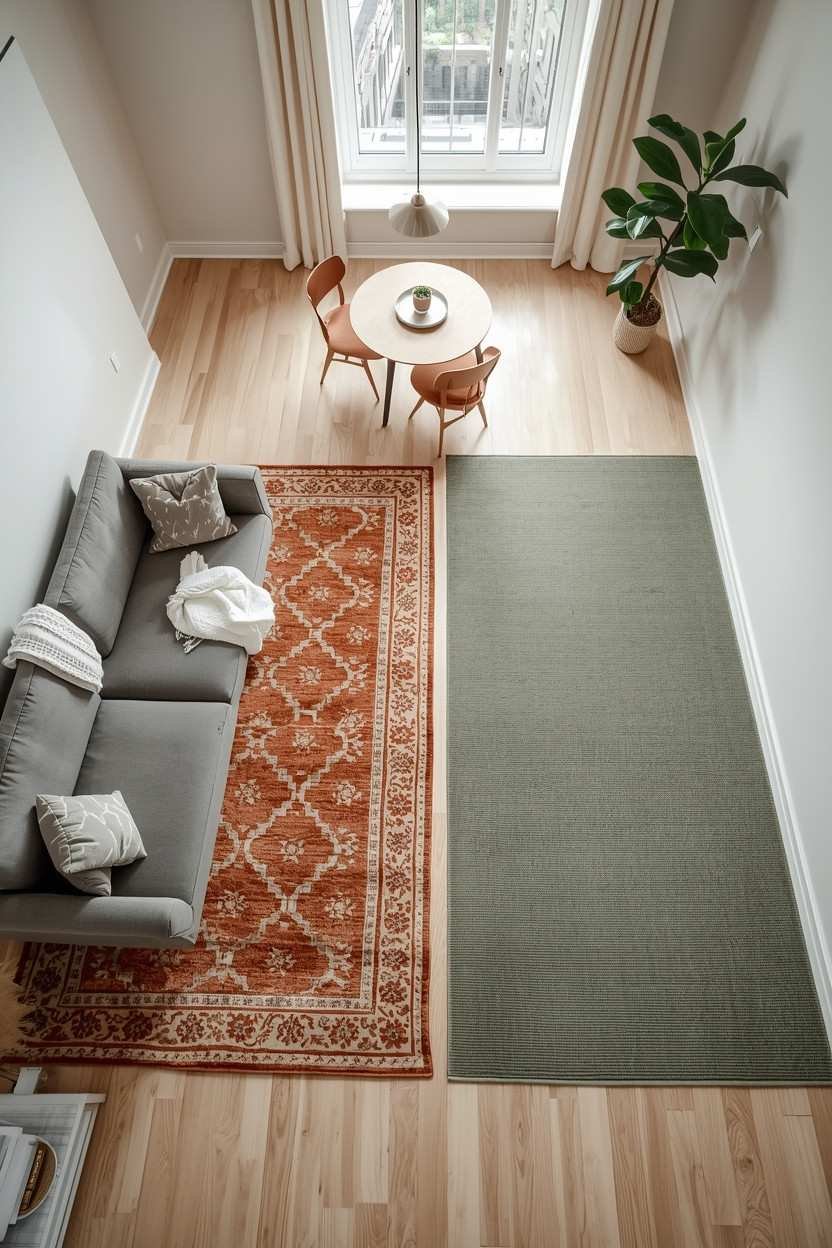
Have you ever lived in a studio apartment where everything is in a state of disorder and nothing seems like it belongs to any specific place?
That is what happens when there is no zoning since the living room is blending in the sleeping room, the dining room is not a dining room, and the whole room is just one huge undefined space.
Rugs fix this because a rug under the sofa and coffee table creates a living zone. A different rug under the dining table creates an eating zone. You’re making visual rooms inside one room and it changes the feel completely.
📏 On Sizing: Go bigger than you think you need and the reason is that a rug that is too small makes furniture look like it’s floating with no anchor. The front legs of your sofa should actually sit on the rug – on it, not edging up to it.
8. Hang Curtains High and Wide
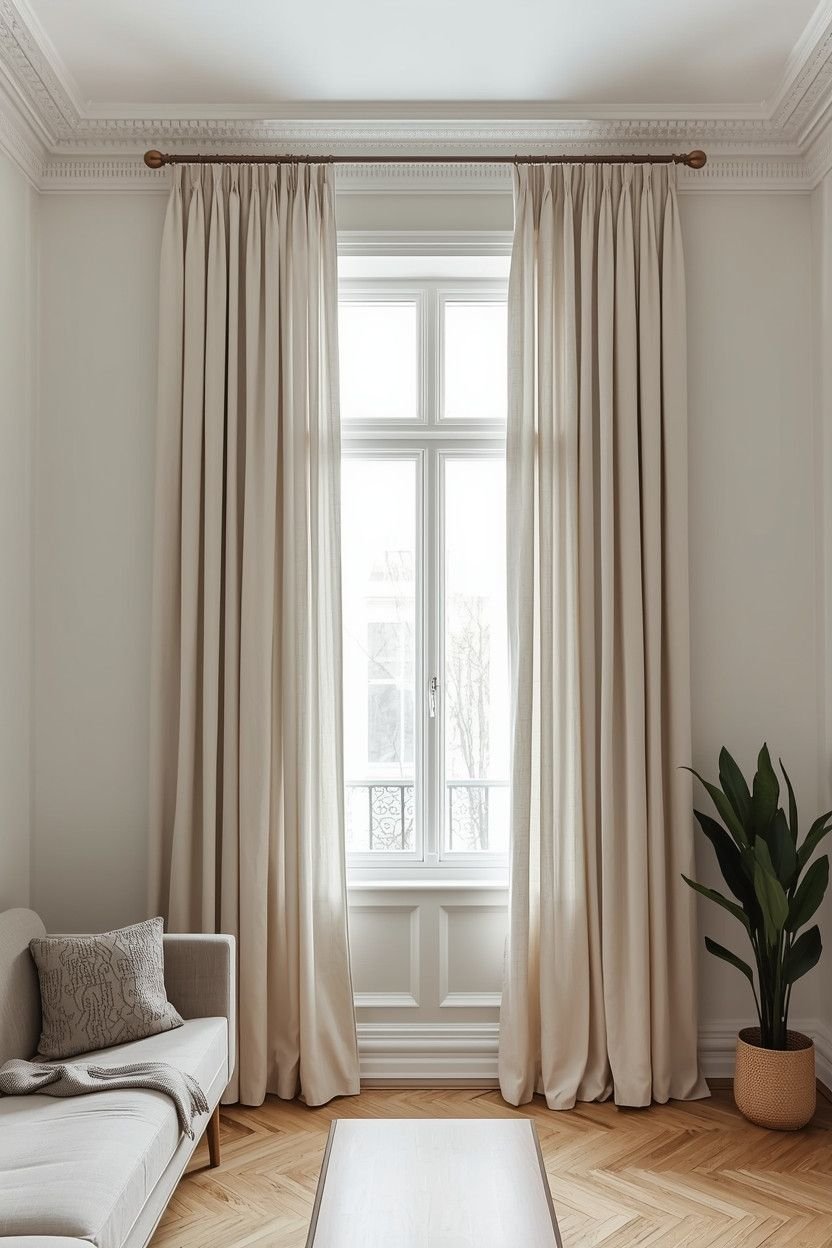
Install the curtain rod close to the ceiling and extend it about 8-10 inches past the window frame on each side. It is a simple and fast update that will make a small room look larger at a minimal cost of about 15 dollars on new brackets and longer curtain panels.
Most curtain rods are placed a few inches above the window frame, but hanging yours closer to the ceiling and letting the panels reach the floor makes the room feel taller.
People will keep asking how tall your ceilings are and you’ll “smile politely” because you know it’s just curtain placement.
The wide extension means the curtains clear the glass entirely when open with more light and a bigger-looking window. The final result is a wall that looks uninterrupted instead of being cut up by the frame.
Why This Beats Any Other Curtain Hack:
Most curtain tips focus on fabric weight or pattern while this one is purely about placement, which means it works regardless of how your curtains look. Long curtains give a hint of high ceilings to anyone walking by even when the ceilings are perfectly standard.
9. Pull Furniture Away from the Walls
Everyone pushes all the things against the walls to ‘clear‘ the middle. That gives more floor space, right?
I did this in every apartment I lived in until someone pointed out that the room looked like a waiting room. Everything marooned at the perimeter with nothing connecting to anything else.
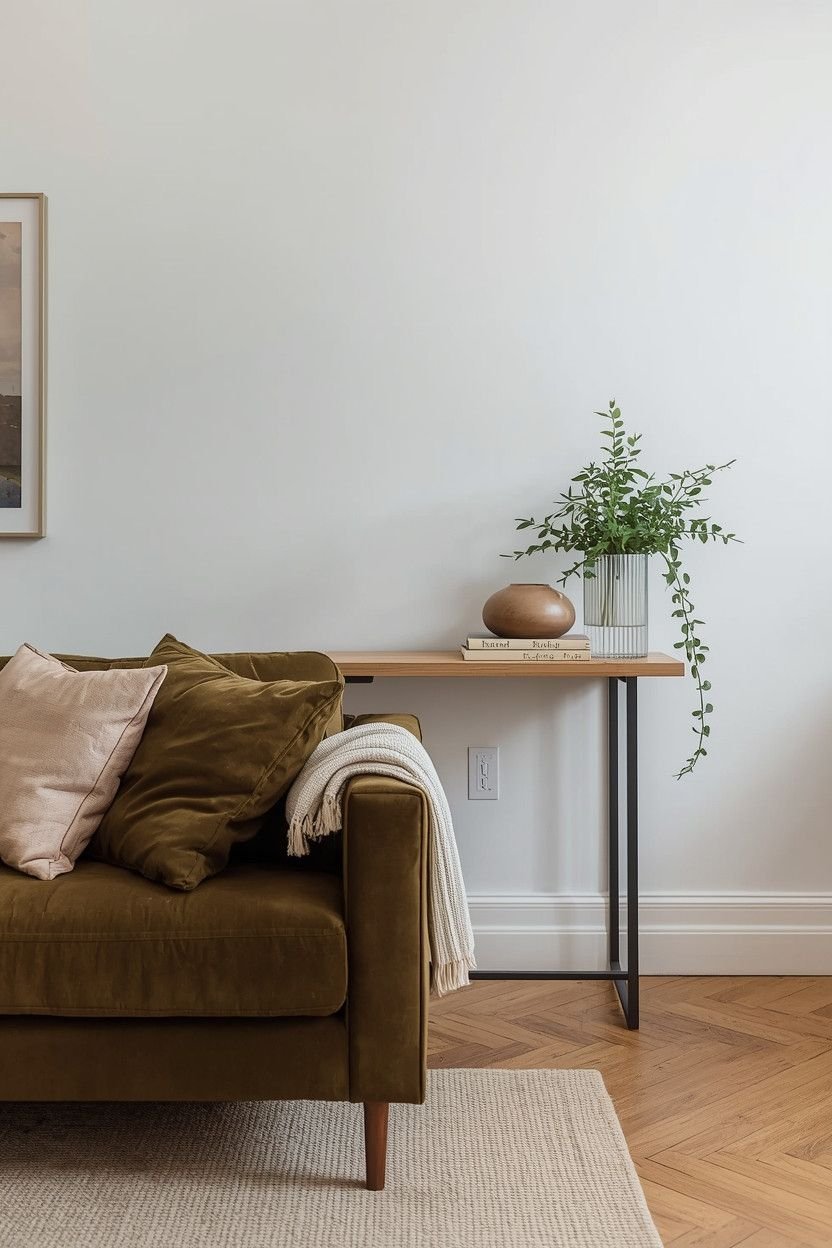
Pull the sofa four to six inches away from the wall. That just a few inches of gap creates a sense of depth like the room has space you’re not quite filling. Interior designers do this in every showroom setup.
- Pull sofa 4-6 inches minimum from the wall
- Anchor the arrangement with a rug underneath
- Leave at least 18 inches of walkway on main traffic paths
- Use a console table behind the sofa if the gap feels odd
10. Swap in Glass or Acrylic Furniture
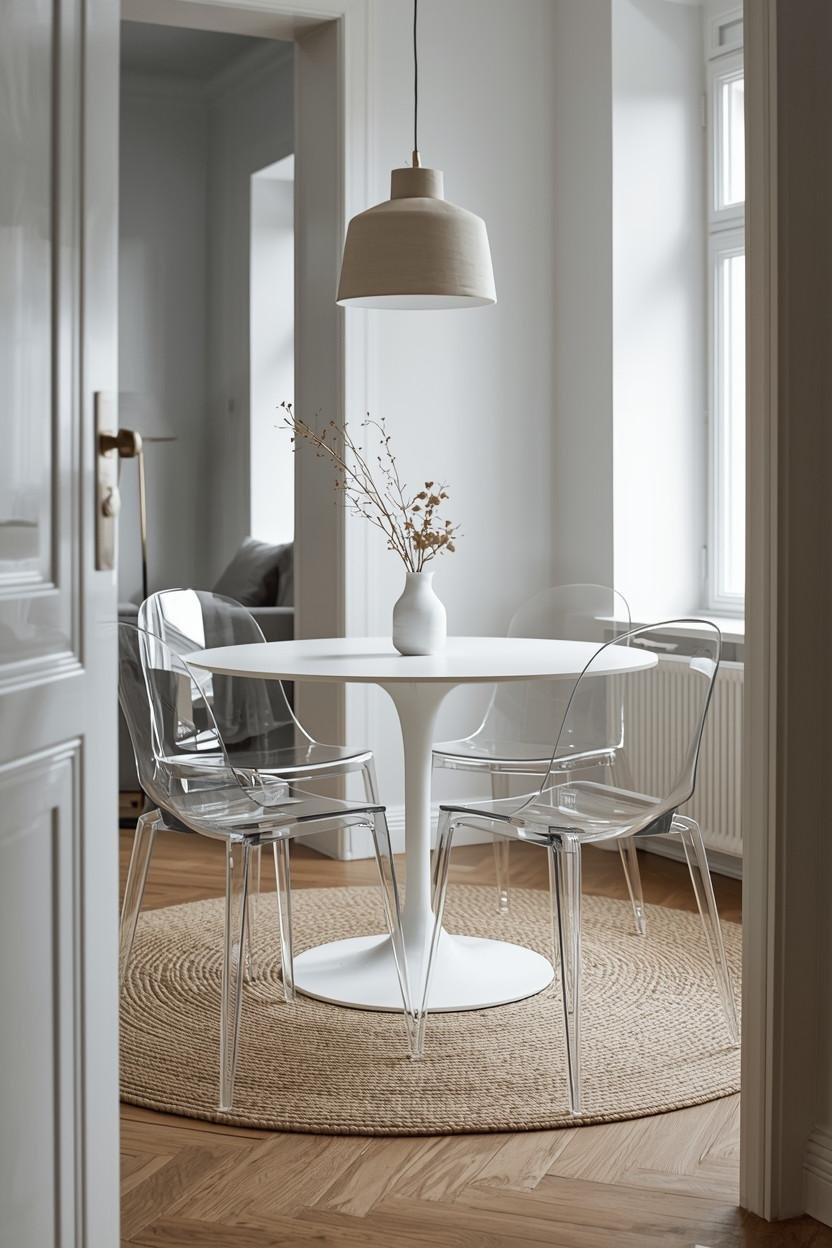
Ever notice how a glass coffee table seems to almost disappear in a room? That’s the whole point because it takes up floor space but not visual space, which in a small room is a completely different thing.
A solid wood coffee table sits in your line of sight and your eye registers it, goes around it. A glass one lets your eye travel straight through to the floor. The effect on the room’s perceived size is real and immediate and you don’t have to replace every piece to feel it.
Dining chairs are the best starting point. Four solid chairs around a table is a lot of bulk in one spot where four acrylic ones makes the whole area feel airy suddenly. Glass side tables and console tables do the same job.
11. Use Built-In Storage (Even Fake Built-Ins)
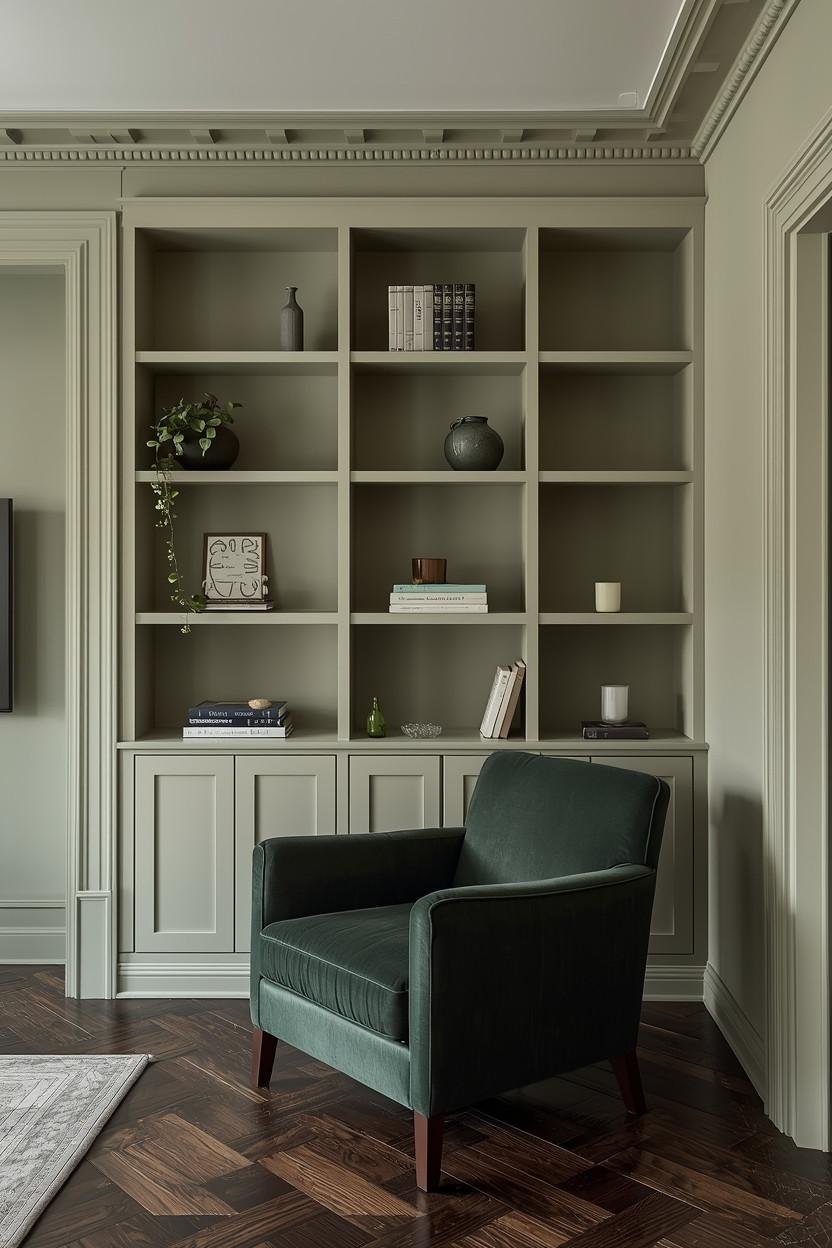
Real built-ins from a carpenter look incredible and cost accordingly but there is a cheaper route that most people don’t know about. Honestly it looks almost as good when you do it right.
The Affordable Built-In Trick:
Line up a few bookcases in an alcove or against a wall, add crown molding along the top to close the ceiling gap. Then the part that makes it is to paint every surface the exact same color as the wall behind them. The shelves, frame, back panel and wall itself should all be matching.
People will ask who built your custom built-ins and when the shelving disappears into the wall color, it stops being a separate object and more being architecture. The room looks bigger because there is no visual break between the wall and storage.
12. Keep the Floor Visible
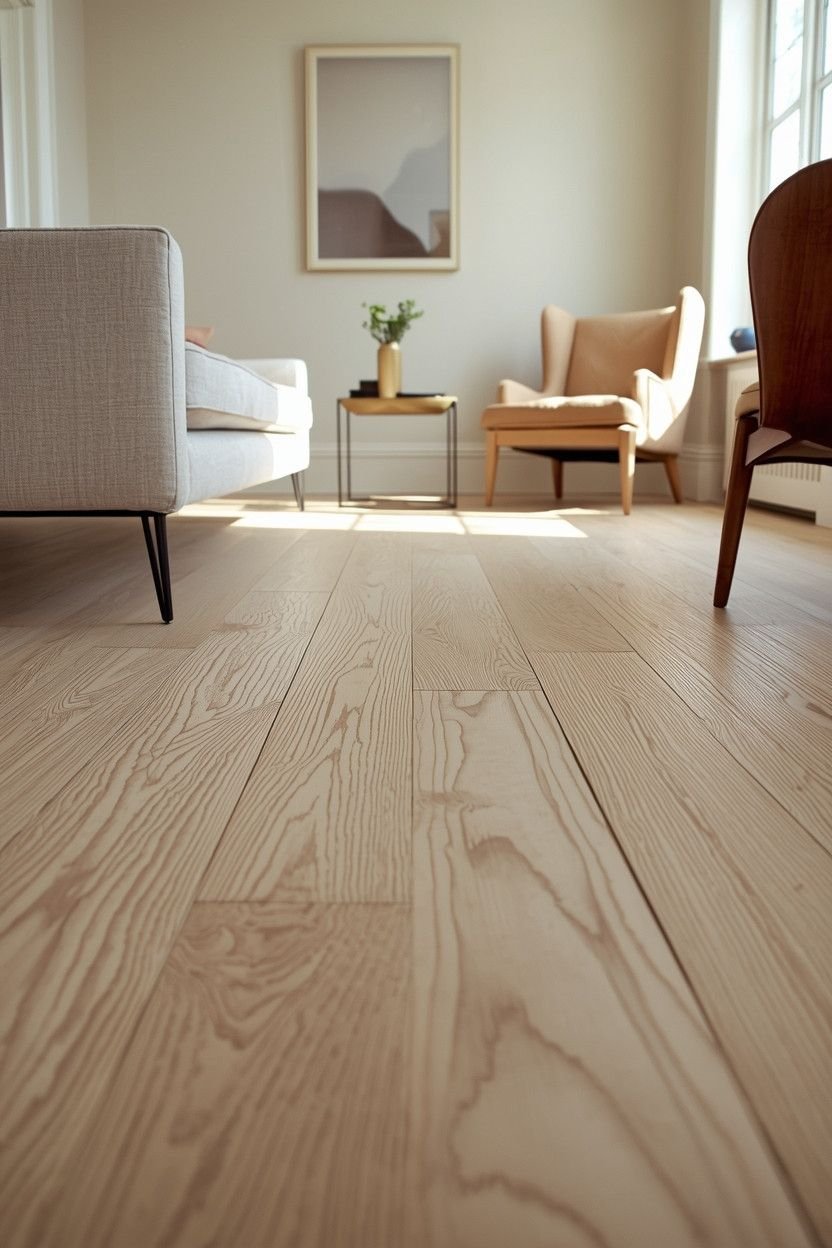
Flat-base furniture is the enemy of a small room. Sofas, beds and console tables that go straight to the floor cut the space off at ground level. Furniture with legs doesn’t do that.
Legs let your eye travel under the furniture and across the floor to the baseboard on the other side. That continuity of floor space makes the room feel significantly larger.
🙌 And the bonus? Cleaning underneath becomes way easier. You’re welcome.
13. Hang One Big Art Piece
How many framed things are on your walls right now?
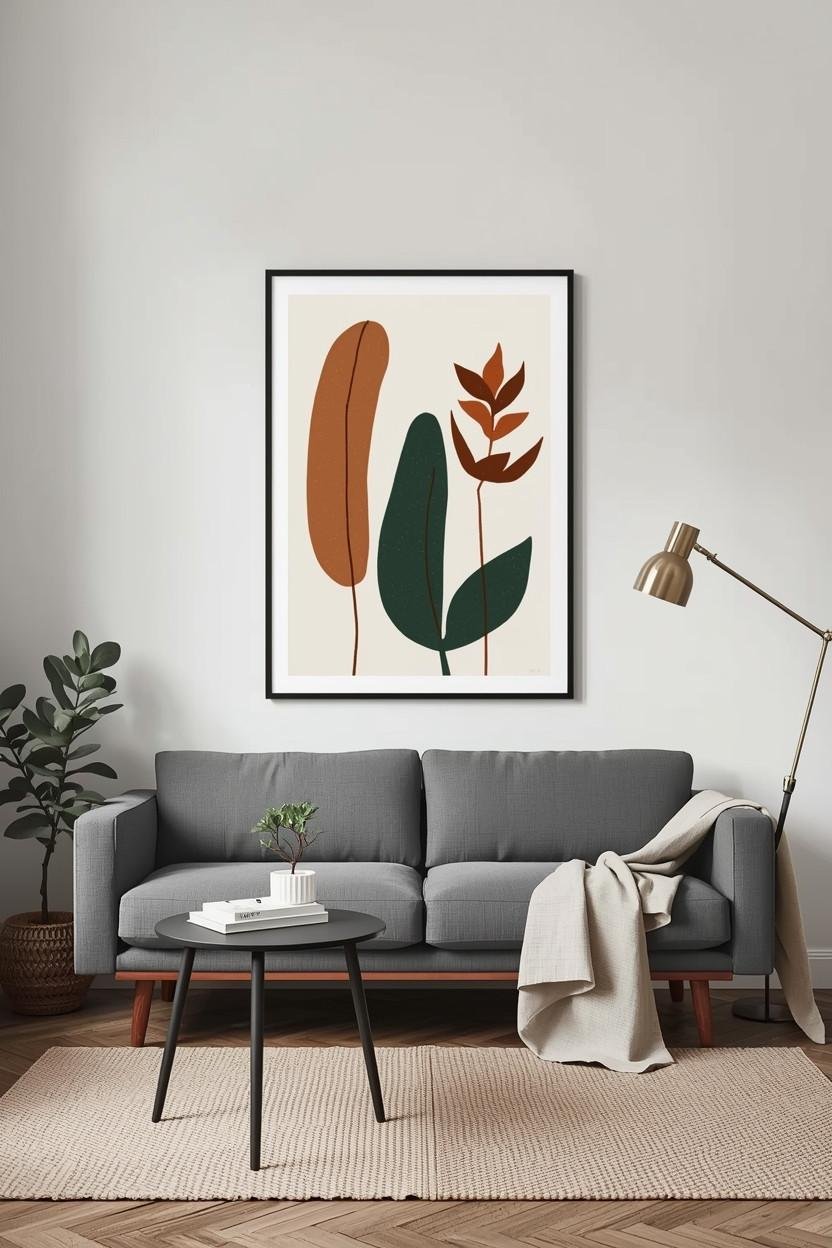
If the answer is more than eight in a room less than 400 square feet, chances are that it is likely one of the reasons why the room feels the way it does. The problem with having too many frames is that your eye never stays in one place as it moves between them.
One oversized print above the sofa that is something you actually love, big enough to mean it, hung where the room has to reckon with it. A single strong focal point creates depth and gives the room somewhere to land which small spaces desperately need.
Even if you love the gallery wall look, keep it to one wall only and use the same frame color throughout. Just leave the other three walls completely bare. That constraint is what saves it from becoming chaos.
14. Add Plants But Just the Right Ones
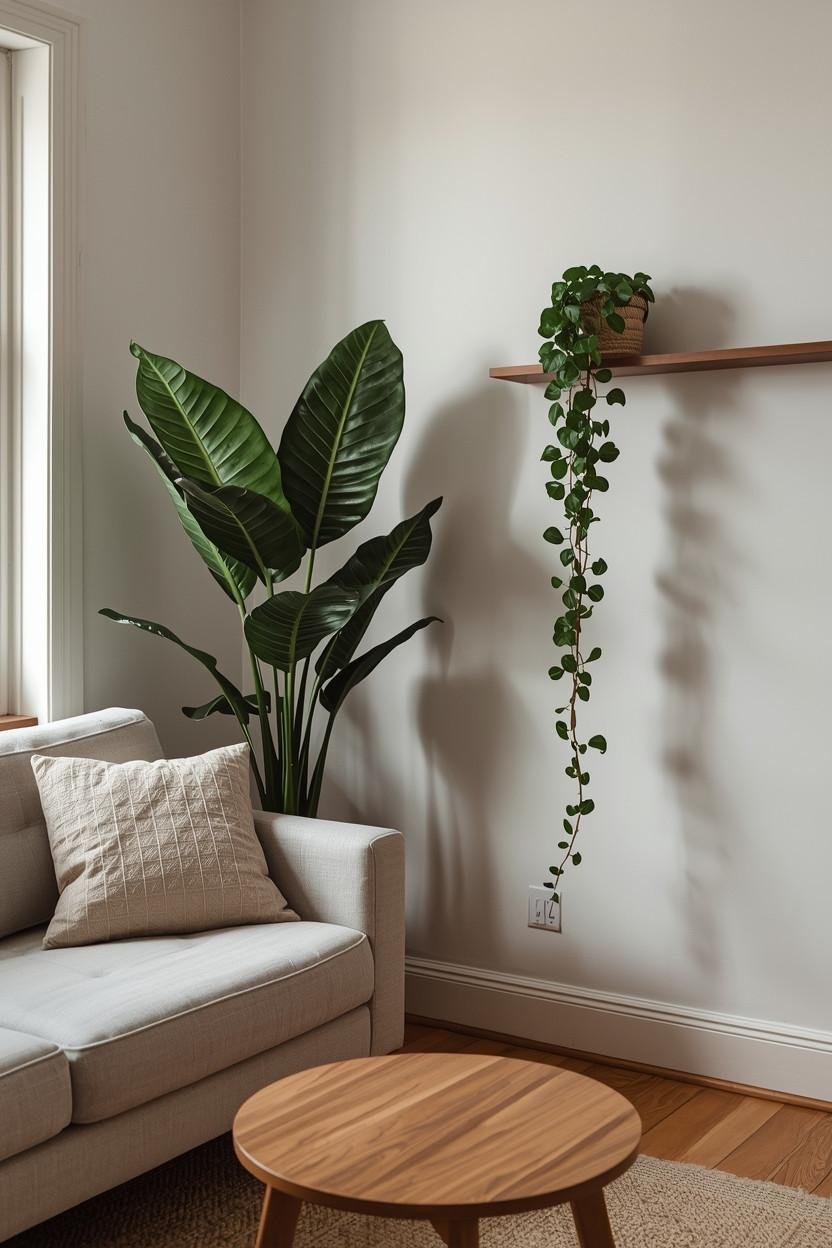
Six plants crammed into a corner because you like plants is just six more objects in a crowded room. I did this for two years thinking it looked lush but looking back at photos: just clutter with leaves.
The approach that works is one plant with a real reason behind where it goes. Tall plants like snake plants or fiddle leaf figs draw the eye upward just like the principle as tall shelving. Trailing plants on high shelves add movement without touching the floor.
- Snake Plant: Tall, graphic, survives almost anything
- Pothos: Trails beautifully from shelves, tolerates low light
- ZZ plant: Compact, sculptural, needs almost nothing
- Fiddle Leaf Fig: Stunning vertical height, needs bright light
- Air Plants: Tiny, no soil, mount anywhere
15. Try Diagonal Furniture Placement
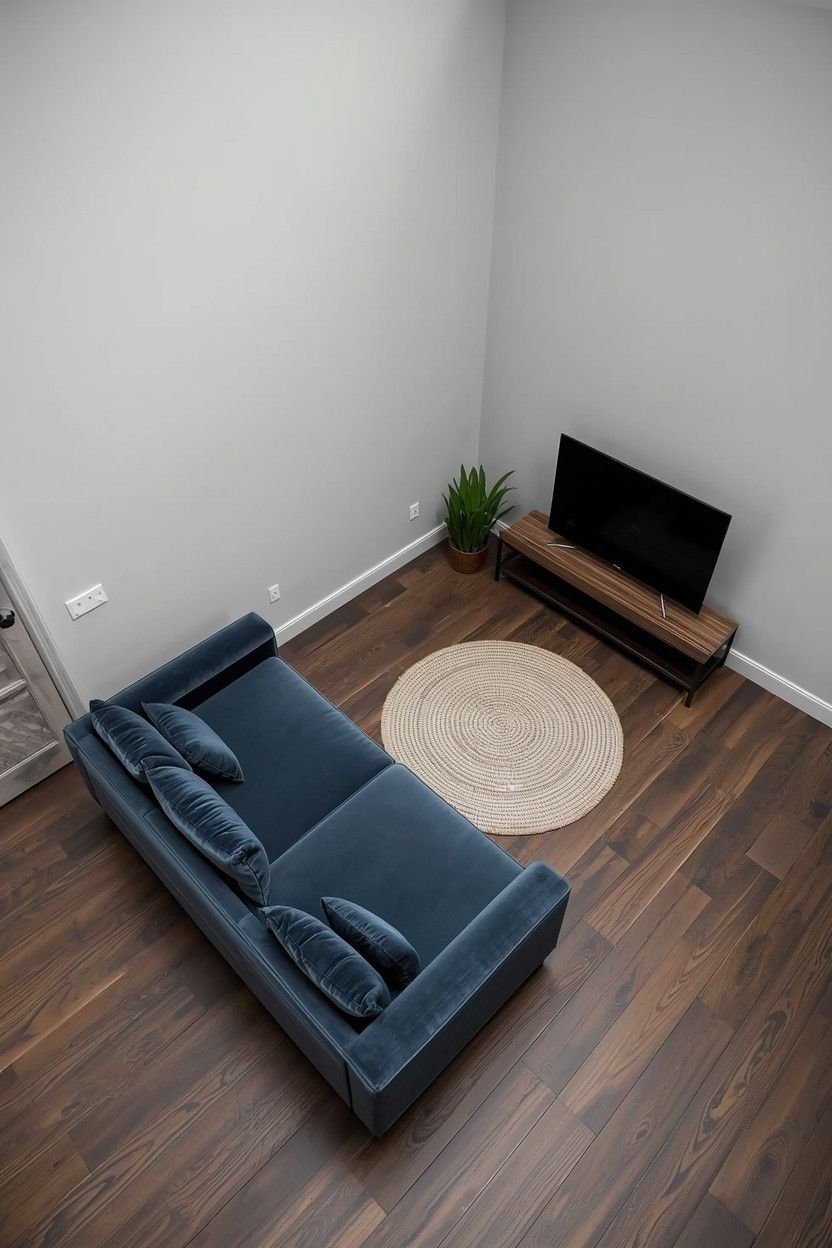
This one sounds bold and will feel weird to you for about a day. My living room was an almost perfect square and everything lined up parallel to the walls made it look like a diagram – perfectly equidistant.
I angled the sofa toward the TV on a whim and a few people asked if I’d changed something without being able to say what. I hadn’t touched anything except the sofa angle. A diagonal cuts corner to corner (the longest available distance in the room) instead of wall to wall.
Note: Check your traffic routes before committing because in a narrow room diagonal is usually a mistake and in a square room, it often fixes everything.
16. Paint the Ceiling Lighter Than the Walls
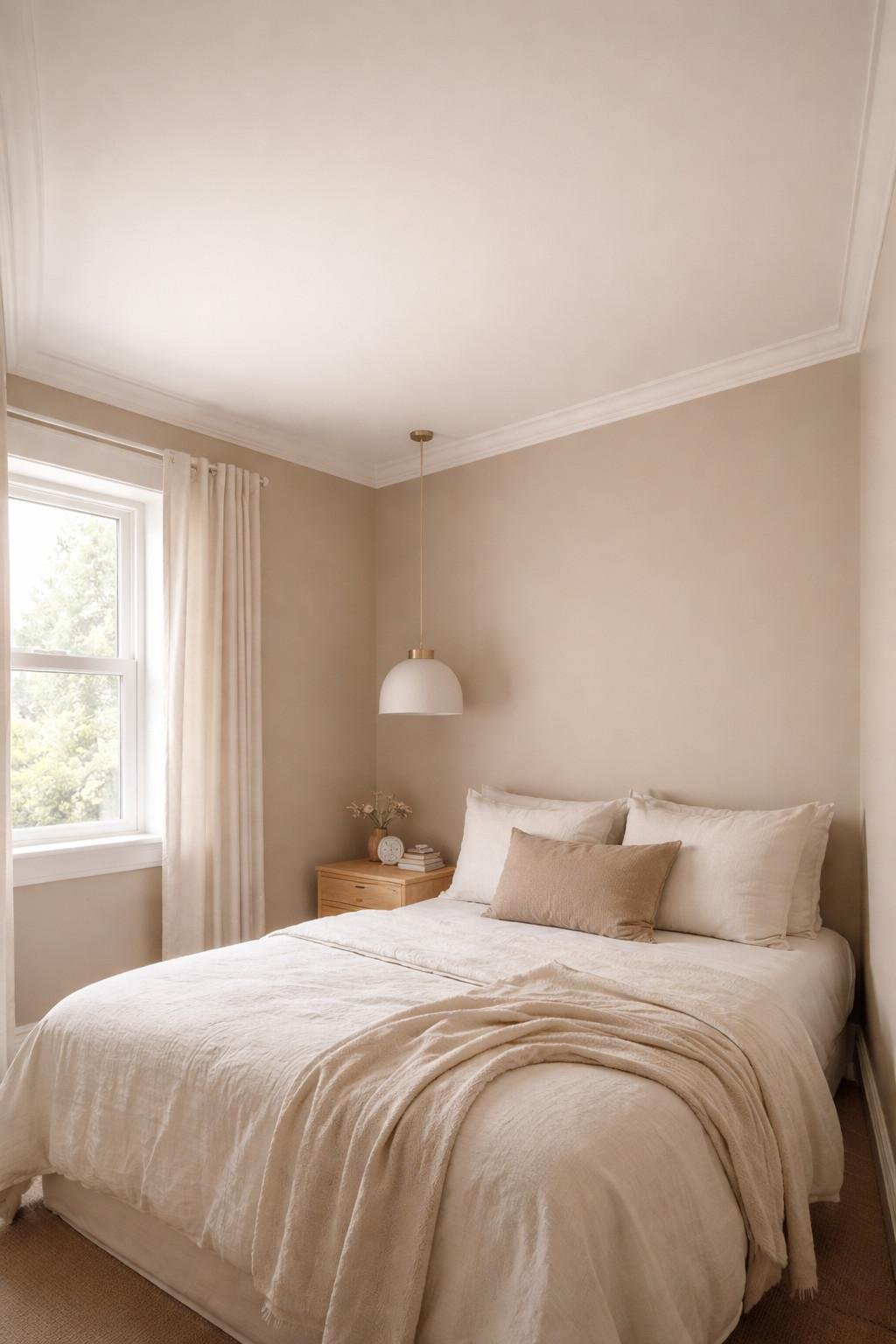
The majority of individuals paint the ceiling in a bright white, and the walls in another shade and wonder why the room still feels somewhat low. The high contrast between the wall and the ceiling causes your eye to interpret it as the end of the room.
Take your wall decor and apply one paint chip lighter on the same card for the ceiling. That edge softens, the top of the room feels like it’s lifting away and the whole space feels taller without you touching a single structural element.
I stumbled onto this by accident once when I ran out of proper white. The room was somehow different and it took me a very long time to understand why.
Warm greige walls, a shade lighter in the ceiling, crisp white trim and the room is suddenly taller than it has any right to be.
17. Keep Window Sills Completely Clear
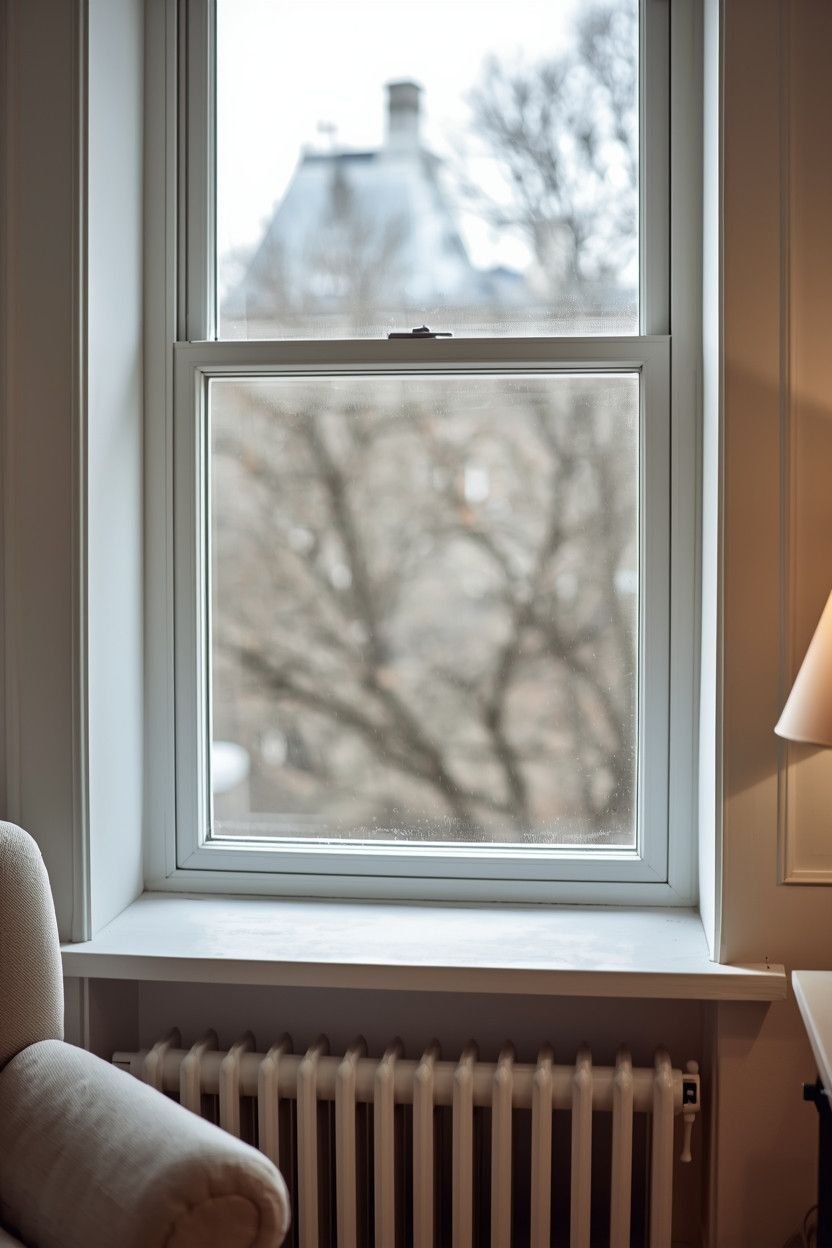
Window sills are prime spots in a small room and most people fill them with a dead candle, a plant they’re in denial about, some coins and a charger for a device they might not even own anymore.
Well, on the other hand a bare sill makes the window look bigger and lets light in without obstruction. It also gives the eye somewhere to rest and provide a pause in the room where nothing is competing for attention.
Keep one small item at most, only if you really need it. The return from one item to five happens faster than you expect, so make a rule once and stick to it.
18. Go Monochromatic
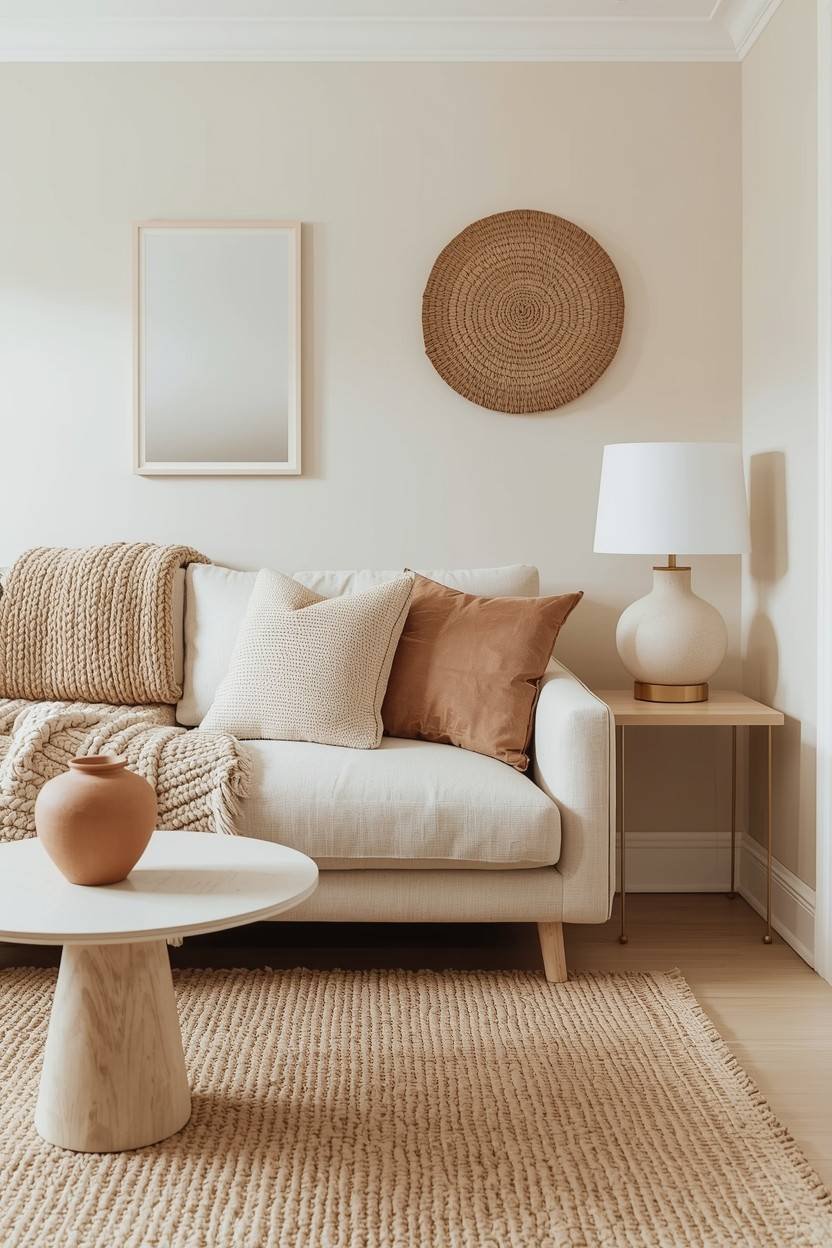
I resisted it for years because it seemed like the color scheme of someone who couldn’t commit to one. Then I tried it with cream walls, a cream sofa, a cream and oatmeal rug with a terracotta throw and a brass lamp.
Interestingly the room looked much more pulled-together than anything I had done with five competing colors.
Pick one base such as cream, warm gray, soft sage or dusty blue and use it across the room including the walls, big furniture, textiles.
Then mix textures so it doesn’t go flat: linen next to velvet next to wood. The room stops looking like a collection of separate objects but feels more cohesive.
Pro Tip: Place one or two accent pieces in contrasting tones so that your eye has a place to draw in. But the base holds together as one tone and this foundation makes the room feel larger than it is.
19. Leave Some Space Empty
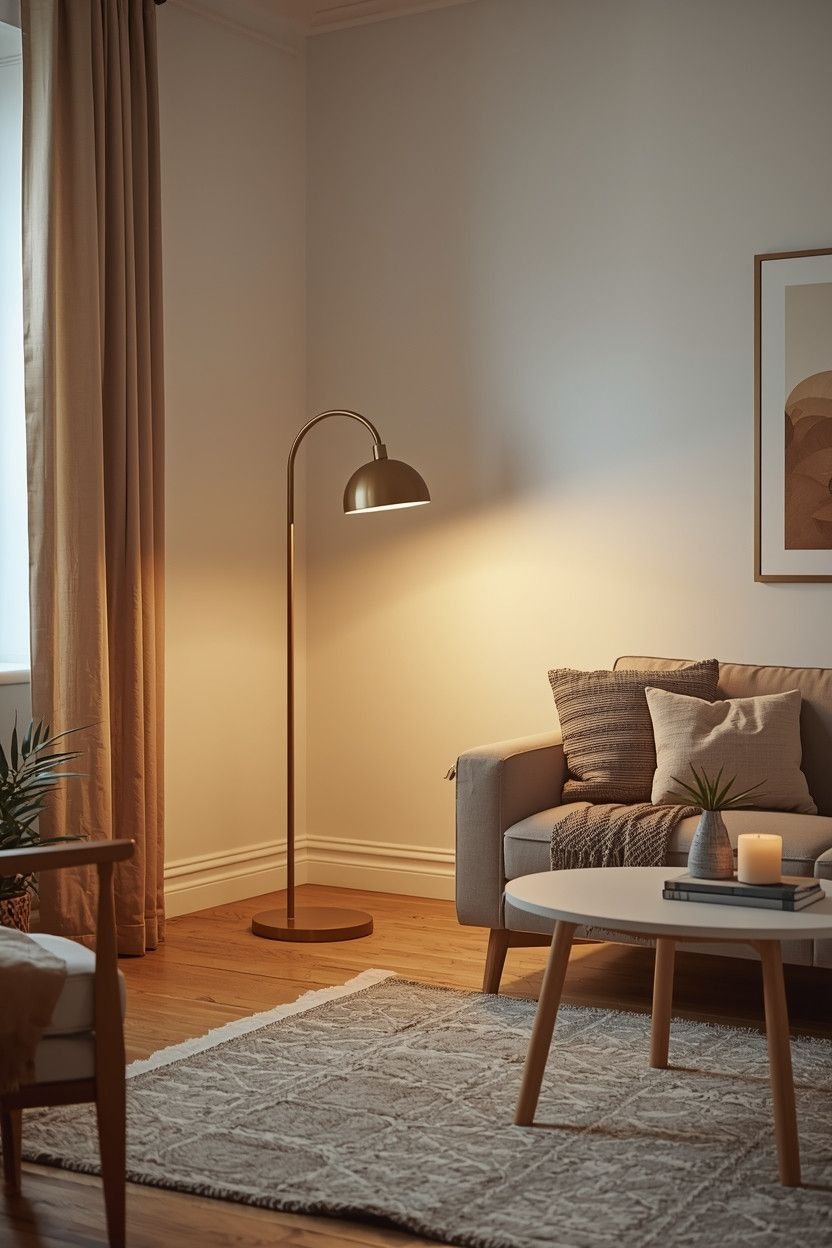
I catch myself doing this all the time like when I see a clear shelf and think it looks unfinished, so I try to “fix” it, even though the fix often makes it worse.
Remember that empty space is not wasted space. A blank wall, a clean counter, a corner with just a floor lamp, each of these gives everything around it some breathing room. The objects you have start to look selected rather than accumulated.
The hardest edit in a small room is leaving the parts that are already working alone. But it’s also the one that makes the biggest difference and it costs exactly nothing.
20. Put Everything on Dimmers
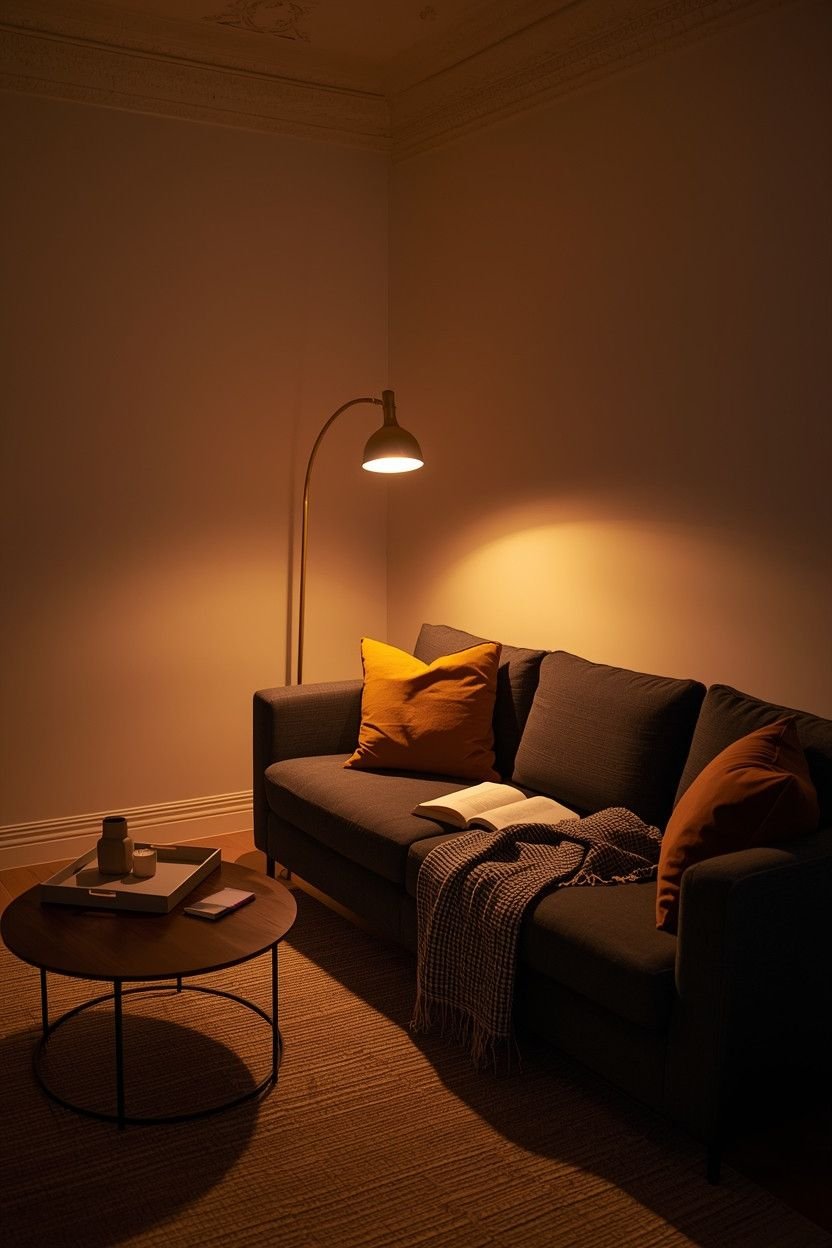
Full overhead lighting in a small room makes everything look flat and emphasizes how small the space really is. Every corner is lit and the room can start to feel a little harsh.
Instead, dim the main light and add a floor lamp or table lamp. The warm, layered light creates a cozy feel and soft shadows, which helps the room feel more relaxed and less cramped..
A dimmer switch costs under $20 and takes about 15 minutes to install. Pair it with warm bulbs (around 2700K–3000K) and the room will feel more comfortable in the evening.
21. Give One Wall a Job
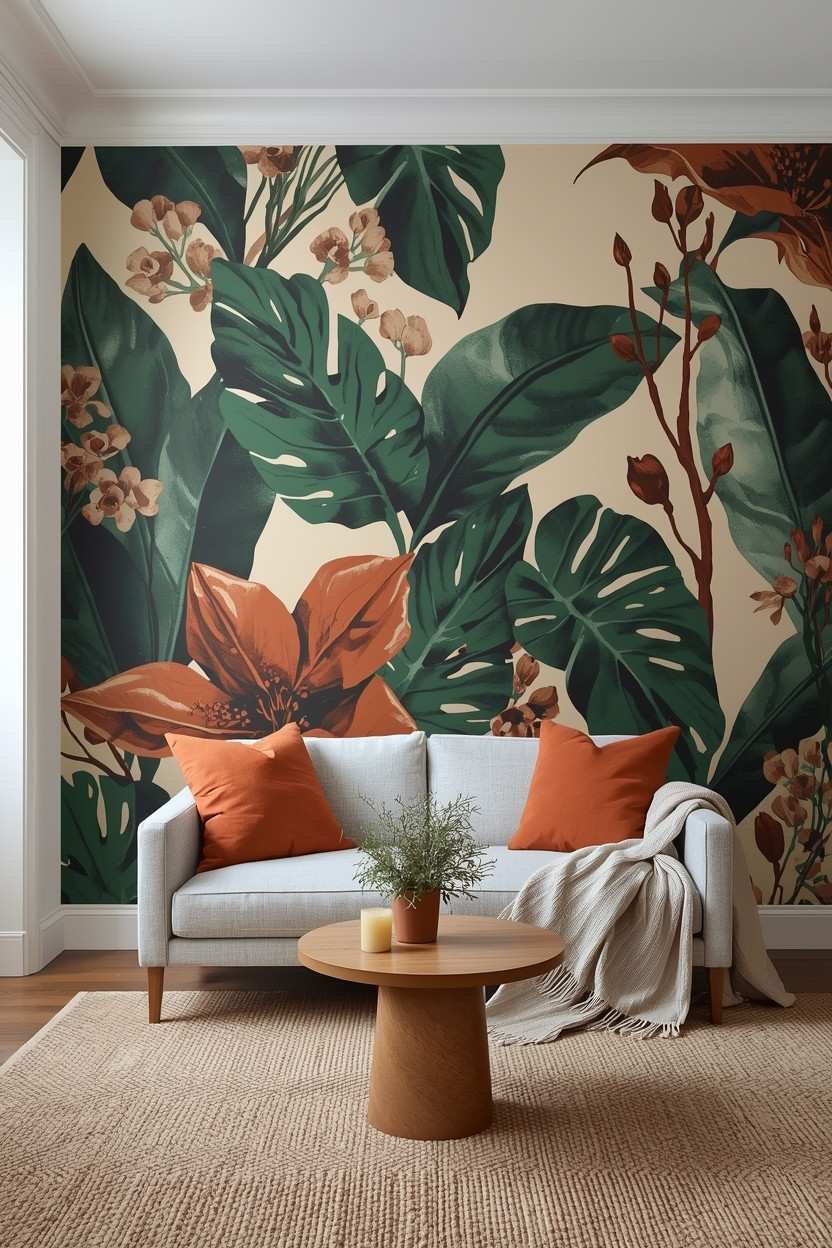
One wall often serves a different function than the rest and that is what we call a feature wall. A wall is treated in a way that provides a focal point to the room and makes it feel like space has a direction.
Vertical shiplap draws your eye upward and large-scale wallpaper like botanical, abstract, something with depth makes the wall look like it keeps going beyond where it actually ends.
Even painting one wall with one shade deeper than the rest of three creates a soft sense of recession. Place it on the wall you face when you walk in or on the wall your main seating faces while the other three walls remain plain.
A Few Bonus Tips That Help Small Spaces Feel Bigger
The following quick changes can also make a noticeable difference and instantly improve the overall feel of your small room.
Use Rugs to Define Areas
Rugs visually organize a space but it is also important to note that a large rug actually works better than a small one because it ties the furniture together rather than chopping the room into pieces.
A rug can separate zones such as:
- Living area
- Workspace
- Dining corner
Keep Walkways Clear
This seems obvious, but many of you here reading this guide have probably already overlooked it. Furniture should allow easy movement so there need to be about 30 inches of walking space between large pieces to make rooms feel open rather than cramped.
Use Multi-Purpose Furniture
As mentioned earlier, small spaces love furniture that does double duty and that is because they reduce clutter and maximize space. Now this honestly feels like cheating but in a good way.
Examples:
- Storage ottomans
- Sofa beds
- Expandable dining tables
- Coffee tables with storage
Start With Just One
You don’t have to implement all these 21 ideas at once.
Pick one that costs the least and do it this week, like moving up the curtain rod, pulling the couch away from the wall, installing a dimmer switch. None of these are permanent and none take more than an afternoon.
The difference between a small space that feels terrible and one that looks great is almost never square footage. It is lighting, sight lines, breathing room and whether the stuff in the room is earning its place or just taking up space.
Small spaces can absolutely feel big, we just need to give them a little help to get there.